- By Admin
- 21 Jun, 2026
- Corporate
The Difference Between Rigid and Swivel Casters for Heavy-Duty Equipment
Efficient material handling in industrial facilities and large warehouses requires carefully engineered mobility systems to ensure the safe transportation of heavy loads and maintain smooth production operations. When moving machinery that weighs several tons or maneuvering large containers through narrow aisles, selecting the right caster configuration becomes the difference between controlled, safe movement and operational inefficiency.
Many operations managers focus exclusively on wheel materials while overlooking an equally important factor—the caster frame itself. The design of the caster determines how equipment moves, turns, and responds under load. Understanding the difference between rigid and swivel casters is essential for creating an optimized mobility system that allows workers and mechanical towing equipment to move heavy loads with minimal effort and maximum safety.
If you are looking to improve logistics efficiency within your facility, understanding the specifications of industrial equipment casters will help you make informed engineering decisions for your equipment.
What Are Rigid Casters and When Should They Be Used?
Rigid casters feature a fixed frame design that allows the wheel to move only in a straight line—forward and backward. Since the wheel cannot rotate sideways or change direction independently, this configuration provides exceptional stability during long-distance travel.
Rigid casters offer several operational advantages for heavy-duty equipment:
Excellent Directional Stability
They keep carts, trailers, and large equipment moving in a straight path, preventing unwanted side-to-side drifting during towing or transport.
Higher Structural Strength
Because rigid casters do not contain swivel mechanisms or rotating raceways, they are capable of handling high vertical loads and sudden impacts more effectively.
Longer Service Life with Reduced Maintenance
Their simple design minimizes wear and tear while reducing the risk of failures caused by dust, debris, or metal particles entering moving components.
What Are Swivel Casters and What Are Their Benefits?
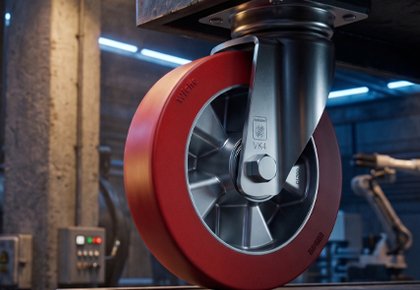
Unlike rigid casters, heavy-duty swivel casters incorporate a rotating mechanism supported by precision bearings that allows the wheel assembly to rotate a full 360 degrees.
This design provides outstanding maneuverability, enabling equipment to change direction easily, navigate obstacles, and operate efficiently in confined spaces.
Modern industrial facilities rely on swivel casters for several key advantages:
Superior Maneuverability in Tight Spaces
Large equipment can be positioned, rotated, and moved around corners more easily, making swivel casters ideal for warehouses, production lines, and storage facilities.
Reduced Physical Effort
Swivel casters respond instantly to directional changes, minimizing the force required to steer heavy loads and improving operator comfort.
Advanced Brake and Locking Options
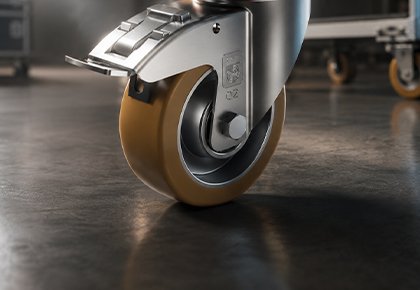
Many swivel caster systems can be equipped with total-lock braking mechanisms that secure both wheel rotation and swivel movement, ensuring maximum stability when equipment is stationary.
The Ideal Combination: Using Rigid and Swivel Casters Together
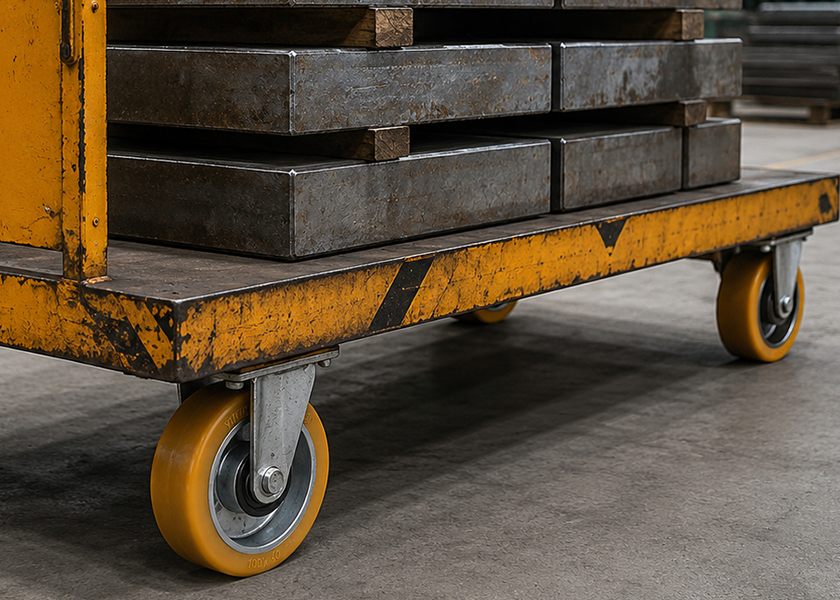
In material-handling applications, heavy equipment rarely relies on only one caster type. Instead, engineers typically create a balanced configuration that combines the advantages of both designs.
The most common and effective arrangement consists of:
- Two rigid casters mounted at the rear
- Two swivel casters mounted at the front
This configuration provides directional stability from the rear wheels while allowing smooth steering and maneuverability through the front wheels. The result is improved control, safer operation, and greater efficiency when transporting heavy loads.
Frequently Asked Questions About Rigid and Swivel Casters
What is the best caster configuration for heavy-duty transport carts?
The most widely used configuration is two rigid rear casters combined with two front swivel casters. This arrangement offers an excellent balance of stability and maneuverability for industrial transport applications.
When should equipment use four swivel casters?
Four swivel casters are recommended when equipment operates in extremely confined spaces and requires multidirectional movement or the ability to rotate in place. However, this configuration may be more difficult to control when moving over long distances.
How does mechanical towing affect caster selection?
When equipment is pulled by tow tractors or mechanical vehicles, rear rigid casters are often essential for maintaining directional control and preventing trailer instability. Front swivel casters should be equipped with heavy-duty bearings capable of handling higher travel speeds and continuous operation.
Conclusion: Move Heavy Equipment Safely and Efficiently with One Step
There is no universally superior caster design. The best solution is always the one that matches your facility layout, movement requirements, and load capacities.
Selecting the right combination of rigid and swivel casters can significantly improve operational efficiency, reduce physical strain on workers, and minimize the risk of equipment damage during transportation.
At One Step, we leverage extensive industry experience to provide advanced mobility solutions tailored to your operational needs. Our comprehensive range of industrial equipment casters includes both rigid and swivel configurations manufactured to the highest international quality standards.
Contact One Step today and let our technical experts help you design the ideal caster arrangement to ensure smooth movement, precise control, and maximum safety for your heavy-duty equipment.