- By Admin
- 21 Jun, 2026
- Corporate
Specifications of Heavy-Duty Industrial Casters and German Standards
Modern production lines and logistics systems require highly reliable and safe mobility solutions to manage heavy material handling operations while minimizing unexpected downtime. In demanding industrial environments where loads can reach several tons, engineering principles consistently demonstrate that the quality of equipment mobility systems plays a critical role in maintaining operational safety and long-term efficiency.
Behind every heavy-duty transport cart, industrial platform, or large-scale handling system that moves smoothly and safely lies a robust mechanical design built around heavy-duty industrial casters. Choosing these critical components is not simply part of purchasing equipment—it is a strategic investment that protects assets, improves workforce productivity, and significantly reduces long-term maintenance costs.
If you are seeking maximum performance and uncompromising durability, understanding the standards and specifications of heavy-duty industrial casters is the first step toward achieving safe and sustainable operations.
Why Are German Standards Considered the Global Benchmark?
German caster wheels have earned a worldwide reputation for excellence due to their strict adherence to European and German manufacturing standards, including regulations such as DIN EN 12532 and DIN EN 12533. These products undergo rigorous load and stress testing before reaching the market.
German engineering focuses not only on creating wheels that roll smoothly but also on optimizing load distribution, movement dynamics, and rolling efficiency to reduce the physical and mechanical effort required during operation.
Key Advantages of German Industrial Casters
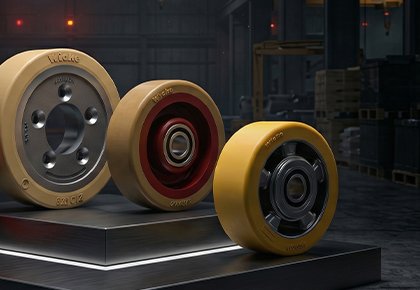
- Premium polyurethane compounds
- Designed to resist deformation and flat spotting, even when supporting heavy stationary equipment for extended periods.
- Sealed precision bearings
- High-quality bearings are fully protected against dust, moisture, and metal debris, ensuring reliable long-term performance.
- Heat-treated steel structures
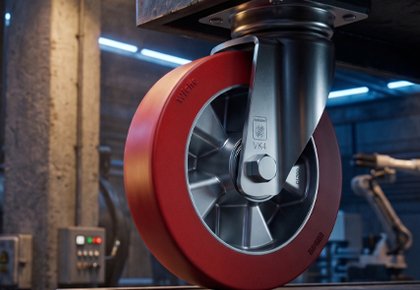
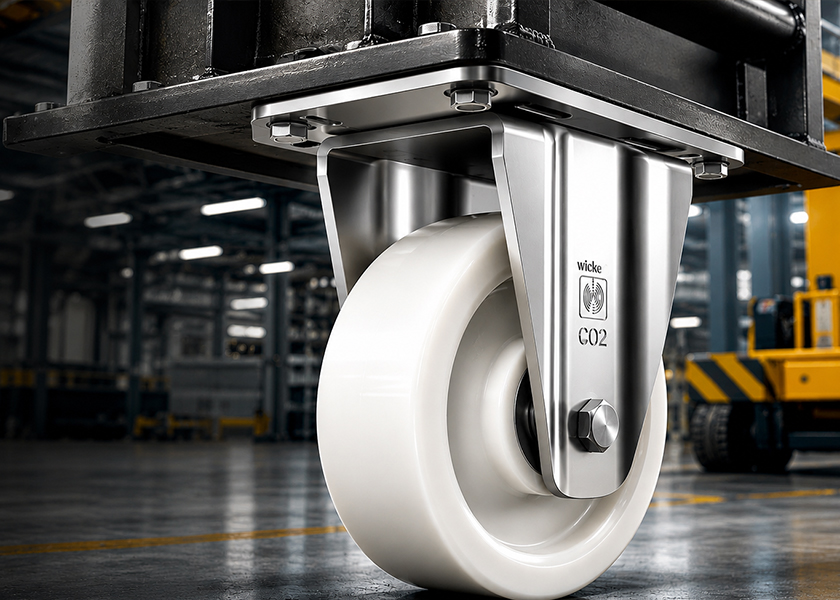
- Heavy-duty caster frames are manufactured from high-strength steel engineered to withstand severe impacts and lateral forces.
Essential Heavy-Duty Caster Safety and Performance Features
Selecting industrial casters based solely on static load capacity without evaluating dynamic performance can lead to premature failure, equipment damage, and increased operational risks. Heavy-duty applications require a carefully engineered balance between wheel material, caster design, and braking systems.
When specifying heavy-duty casters, consider the following critical features:
1. Forged Steel Caster Frames
Heavy-duty caster assemblies should utilize forged or heat-treated steel construction to resist bending, twisting, and structural failure under demanding operating conditions.
2. Cast Polyurethane on Steel Core
This configuration is considered the industry-standard solution for heavy loads. It combines exceptional load capacity with floor protection, making it ideal for epoxy-coated and polished concrete surfaces.
3. Total Lock Braking Systems
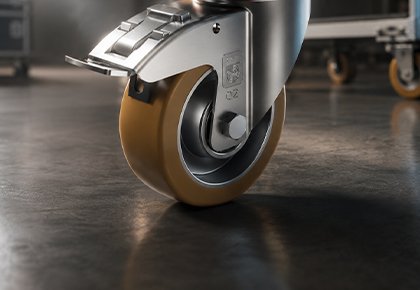
Advanced total-lock mechanisms simultaneously prevent wheel rotation and swivel movement, ensuring maximum stability during loading, unloading, and maintenance operations.
Frequently Asked Questions About Heavy-Duty German Casters
What makes German caster wheels superior to standard commercial casters?
German caster wheels are distinguished by precision manufacturing, compliance with European standards, superior material quality, and high-performance bearings. These factors contribute to longer service life, reduced rolling resistance, and improved operational reliability.
How do you calculate the required dynamic load capacity?
A common engineering method is:
(Equipment Weight + Maximum Load) ÷ (Total Number of Wheels – 1)
Subtracting one wheel provides a safety factor that accounts for uneven surfaces and temporary load concentration during operation.
When should steel wheels be used instead of polyurethane wheels?
Steel wheels are typically recommended for extremely high-temperature environments such as foundries, steel mills, and furnace operations. However, they are generally unsuitable for epoxy-coated or smooth concrete floors because they can cause significant surface damage and generate excessive noise.
Conclusion: Move Your Operations Forward with Confidence Through Step One
In heavy industrial environments, success depends on reliable engineering solutions and uncompromising quality standards. Investing in premium heavy-duty German casters from the beginning helps protect equipment, employees, and infrastructure while minimizing maintenance expenses and operational interruptions.
At Step One, we proudly provide a comprehensive range of heavy-duty industrial casters and advanced mobility solutions that meet the highest international quality standards. Our technical specialists are ready to help you select the ideal specifications, load capacities, and configurations to ensure safe, efficient, and trouble-free operation for your facility.