- By Admin
- 21 Jun, 2026
- Corporate
Material Handling Solutions: Heavy Equipment Wheels and Load Calculations
Efficient and safe material handling operations are the backbone of continuous productivity in large factories and logistics facilities. Whether moving machinery that weighs several tons or relocating entire production lines, relying on estimates rather than engineering calculations can lead to costly operational failures and serious safety risks.
Modern mobility and material-handling systems require precise engineering to ensure that every component can withstand heavy loads while maintaining smooth movement under demanding operating conditions. At the center of these systems are industrial wheels, which transform massive loads into manageable and easily movable equipment across a variety of surfaces and floor types.
If you want to improve internal transportation efficiency and protect your facility from unnecessary downtime, understanding how to select the right material handling wheels and accurately calculate load requirements is a crucial first step.
Why Engineering Calculations Matter When Choosing Industrial Load Wheels
Selecting industrial load wheels based solely on appearance or size can result in premature wheel failure, damaged flooring, and increased maintenance costs. Heavy equipment is exposed not only to static weight but also to dynamic forces generated by movement, acceleration, braking, and uneven floor conditions.
Proper load calculations and wheel specifications provide several important operational benefits:
Protection Against Unexpected Failures
Correctly rated wheels prevent structural damage, permanent deformation, and sudden breakdowns when supporting heavy loads over long periods.
Reduced Starting Force
High-quality bearing systems minimize the effort required to move equipment manually or mechanically, improving ergonomics and operational efficiency.
Extended Equipment Lifespan
Shock-absorbing wheel systems reduce vibration transfer to sensitive mechanical and electronic components, helping protect valuable equipment during transportation.
How to Calculate Loads for Heavy Equipment Wheels
Choosing the appropriate heavy equipment wheels requires balancing performance, safety, and cost. Overspecifying wheels increases expenses unnecessarily, while underspecifying them creates safety risks and shortens service life.
Maintenance engineers typically follow a standardized calculation method to determine the required load capacity for each wheel.
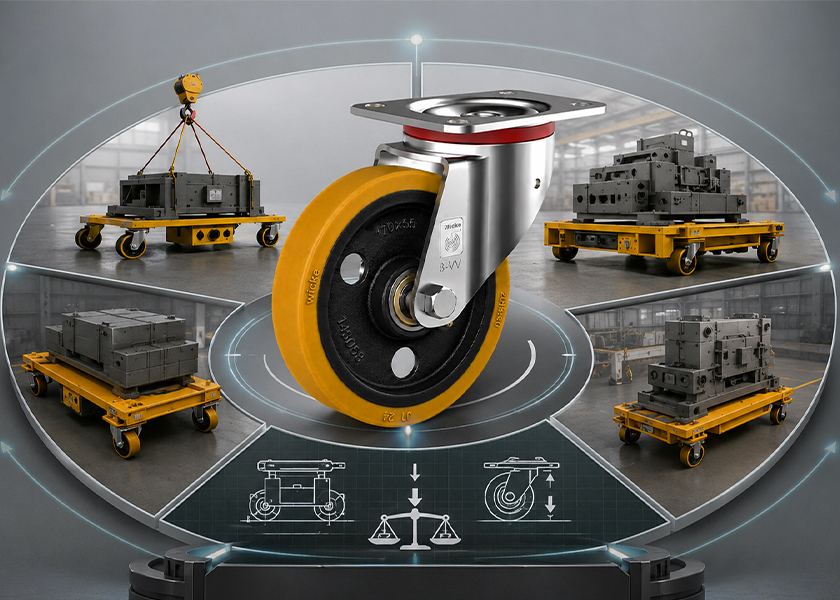
1. Determine the Total Load
Add the empty weight of the equipment or cart to the maximum weight of the materials or products that will be transported.
2. Apply the Safety Factor
Although a cart may have four wheels, real-world conditions often result in uneven load distribution due to floor imperfections.
Instead of dividing the total load by four, engineers commonly divide the total weight by three. This approach assumes that one wheel may temporarily lose full contact with the floor, ensuring that the remaining wheels can safely support the load.
3. Consider Operating Conditions and Speed
Equipment pulled by forklifts, tow tractors, or other mechanical systems is exposed to higher dynamic forces than manually pushed equipment.
For these applications, it is recommended to increase the required load capacity by approximately 20% to account for additional stresses generated by speed, acceleration, and turning forces.
Frequently Asked Questions About Material Handling Wheels and Load Calculations
What is the standard formula for calculating the load capacity required per wheel?
The commonly used formula is:
(Equipment Weight + Maximum Load) ÷ (Total Number of Wheels – 1)
Subtracting one wheel from the calculation creates a safety margin that protects against uneven floor conditions and load distribution.
How does the working environment affect wheel material selection?
Different environments require different wheel materials:
- Cast iron or steel wheels are ideal for high-temperature environments and areas with metal debris.
- Reinforced nylon wheels are well suited for pharmaceutical, food-processing, and moisture-prone environments.
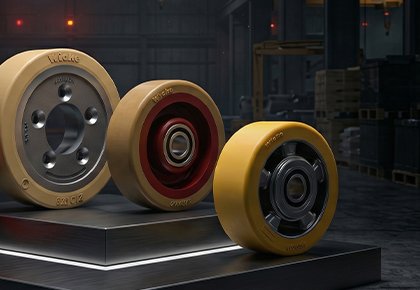
- Cast polyurethane wheels provide excellent floor protection and are ideal for epoxy-coated and polished concrete surfaces.
What are the risks of exceeding a wheel’s rated load capacity?
Overloading industrial wheels can cause permanent flat spotting, bearing failure, structural damage, and sudden wheel separation. These issues can result in equipment damage, product loss, and serious safety hazards for workers.
Conclusion: Move Your Investments Safely with One Step
In heavy industrial environments, success depends not only on the quality of equipment but also on the engineering details that support its daily operation. Accurate load calculations and properly selected material-handling wheels help prevent accidents, reduce maintenance costs, and improve operational reliability.
At One Step, we combine extensive engineering expertise with a comprehensive range of heavy-duty industrial wheels designed to meet the highest international quality standards.
Contact One Step today and let our technical specialists help you perform accurate load calculations and select the ideal mobility solution for your facility, ensuring maximum safety, efficiency, and long-term performance.