- By Admin
- 21 Jun, 2026
- Corporate
Industrial Forklift Wheels: Safety Specifications and High Load Capacity
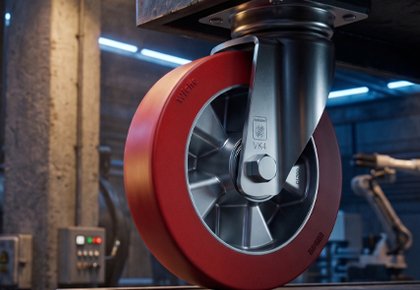
Heavy-duty work environments such as ports, container yards, and steel manufacturing facilities rely on forklifts and large industrial lifting equipment as essential tools for handling and transporting extremely heavy materials. Within these complex mechanical systems, the lower components are exposed to tremendous dynamic and operational stresses far greater than those experienced by conventional transportation equipment. The movement of forklifts while carrying tons of cargo requires uncompromising safety standards and superior component quality. Behind every safe and successful lifting operation are wheels specifically engineered to withstand sudden torque, impact forces, and continuous start-stop movements.
If you are looking to protect your facility and ensure workplace safety, selecting industrial forklift wheels that meet strict safety standards is the first step toward stable and reliable operations.
Why Are Safety Standards Critical for Forklift Wheels?
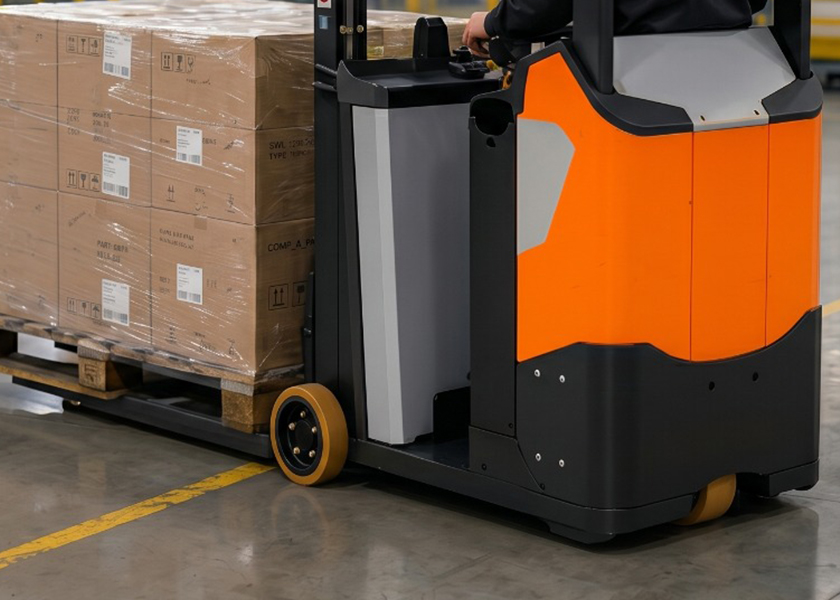
Forklifts differ from conventional transport carts because they lift loads vertically to significant heights, causing the equipment’s center of gravity to shift continuously and place additional stress on the wheels. Any failure or uneven compression in a wheel during lifting operations can compromise the forklift’s stability and potentially result in severe accidents that damage products, equipment, and facilities.
Therefore, forklift wheels must provide advanced safety features, including:
- Structural stability under maximum loads: The ability to withstand vertical pressure without permanent deformation or flat spotting.
- Slip resistance on smooth or wet surfaces: Ensuring excellent traction to prevent skidding during turning or sudden stops.
- Optimal dynamic load distribution: Absorbing side forces generated during steering and maneuvering while fully loaded to prevent axle failure.
Essential Specifications of Shock-Resistant Wheels
Forklifts frequently travel over expansion joints, steel tracks, and industrial debris, exposing wheels to constant impacts and shocks. Using standard wheels in such environments can quickly lead to tire cracking or bearing failure due to their inability to absorb repeated impacts.
When selecting shock-resistant wheels for forklifts, ensure they offer the following features:
1. Internal Shock Absorption Capability
The wheel must effectively absorb and dissipate impact energy, preventing vibrations from reaching the forklift structure and sensitive hydraulic systems.
2. High-Performance Wheel Material
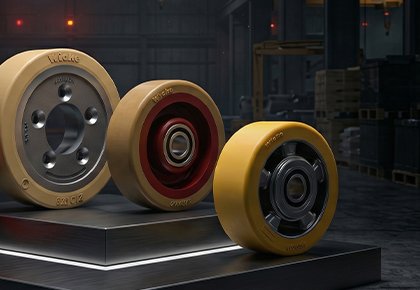
- High-density polyurethane (Vulkollan / Heavy-Duty PU): The preferred material for warehouse forklifts due to its excellent shock absorption, durability, and heavy-load capacity.
- Heat-treated steel wheels: Commonly used in gantry cranes and fixed production line systems, offering maximum resistance to mechanical impacts and extreme temperatures.
3. Reinforced and Sealed Bearings
Heavy-duty bearings protected with steel covers prevent dust, moisture, and metal debris from entering the assembly, ensuring smooth rotation under the toughest operating conditions.
Frequently Asked Questions About Industrial Forklift Wheels
Q: What are the risks of using standard wheels instead of specialized industrial forklift wheels?
A: Standard wheels may fail unexpectedly under heavy loads, potentially causing forklift instability, cargo damage, equipment failure, and serious safety hazards for workers.
Q: How do shock-resistant wheels help reduce forklift maintenance costs?
A: These wheels absorb vibrations and impacts caused by uneven surfaces, preventing stress from transferring to mechanical components, axles, and hydraulic systems, thereby extending the forklift’s service life.
Q: How often should industrial forklift wheels be inspected?
A: A visual inspection should be conducted daily before each shift to check for cracks, damage, or embedded debris. A comprehensive inspection of bearings, braking systems, and wheel assemblies is recommended every three months.
Conclusion: Secure Your Material Handling Operations with Step One
In industrial and logistics environments, safety is the foundation of every successful operation. Choosing forklift wheels that meet international safety standards is not merely an equipment upgrade—it is a critical investment in protecting your workforce, machinery, and business assets.
At Step One, safety and reliability are our top priorities. We provide a premium range of industrial forklift wheels and shock-resistant mobility solutions designed for the most demanding applications. Contact our engineering team today and let us help you select the safest and most dependable specifications to keep your operations running efficiently and confidently.