- By Admin
- 21 Jun, 2026
- Corporate
How to Protect Factory Floors with the Right Industrial Wheels
Large factories and industrial facilities invest significant amounts in building and maintaining their infrastructure, with production hall and warehouse flooring—whether high-quality epoxy or polished concrete—being among their most valuable assets. In demanding industrial environments, these surfaces are exposed to continuous stress caused by heavy equipment and material handling carts operating around the clock. Many operations managers overlook the fact that premature floor damage, cracks, and surface deterioration are often not caused by poor flooring quality, but rather by the use of inappropriate or low-quality wheels.
Choosing the right wheel is not simply a matter of enabling equipment mobility; it is a strategic preventive decision that protects facility floors from costly damage, reduces maintenance expenses, and ensures smooth and safe operations.
If you want to preserve the appearance and performance of your facility for years to come, understanding how to select industrial floor wheels is your first step toward creating a sustainable and cost-efficient working environment.
What Risks Do Incorrect Wheels Pose to Industrial Floors?
Using wheels that are not engineered for the application can create excessive friction and uneven pressure on floor surfaces, accelerating wear and damage to protective coatings. When a hard, sharp, or damaged wheel repeatedly travels across an epoxy floor, it can create scratches that gradually develop into cracks, allowing moisture, chemicals, and oils to penetrate the underlying concrete structure.
Common types of floor damage caused by unsuitable wheels include:
Structural Cracks and Surface Fractures
Hard wheels striking expansion joints and uneven surfaces without shock-absorbing properties can cause progressive cracking and deterioration.
Black Marks and Surface Staining
Low-quality recycled rubber wheels often leave dark streaks and marks that are difficult to remove and negatively affect the appearance of clean industrial facilities.
Pits and Surface Deformation
Flat-spotted wheels create irregular movement patterns that repeatedly impact the same points on the floor, gradually causing pitting and surface wear.
Key Features of Heavy-Duty Industrial Wheels That Protect Floors
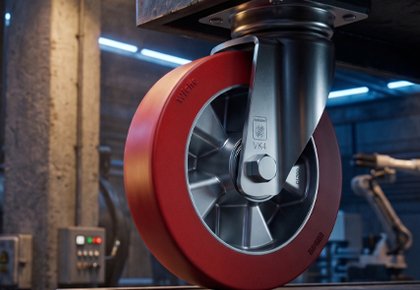
To safeguard your infrastructure investment while maintaining the ability to transport heavy loads, it is essential to use heavy-duty industrial wheels designed to balance strength with surface protection. Modern wheel technology offers advanced materials capable of distributing loads efficiently and reducing concentrated pressure points on flooring systems.
When selecting industrial wheels, prioritize the following specifications:
1. High-Quality Polyurethane Wheels (The Preferred Choice)
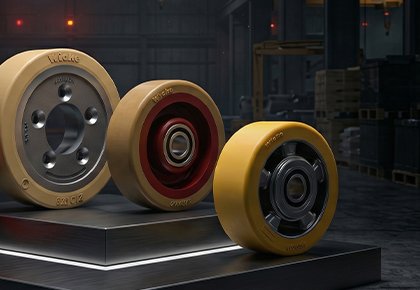
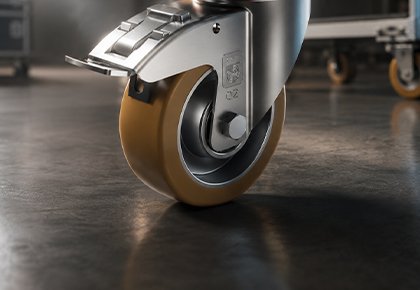
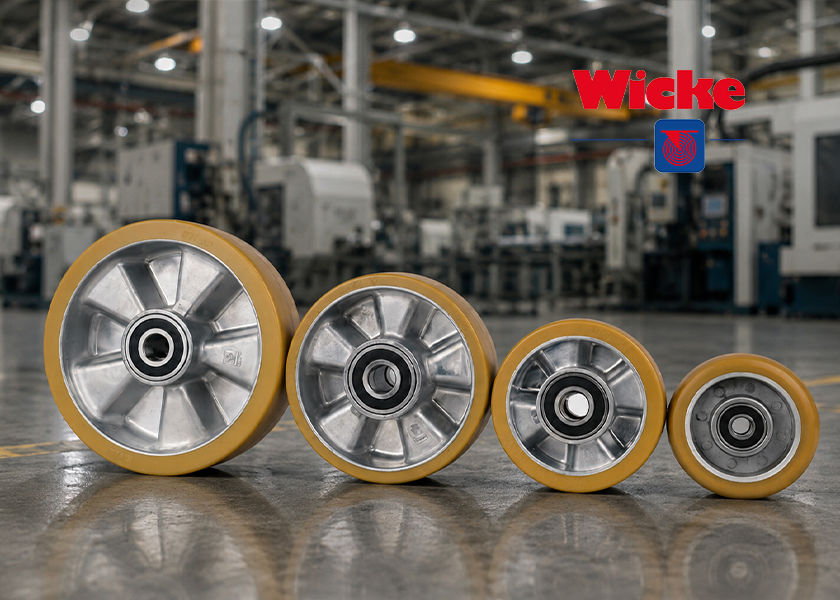
Polyurethane wheels provide the ideal combination of load-bearing capacity and floor protection. They can handle substantial weights while remaining gentle on epoxy and polished concrete surfaces, ensuring smooth operation without scratches or surface damage.
2. Non-Marking Gray Rubber Wheels
Gray industrial rubber wheels deliver quiet operation and excellent traction while preventing black marks and discoloration on sensitive flooring surfaces.
3. Precision Bearing Systems
High-quality sealed bearings reduce rolling resistance, allowing equipment to move smoothly with minimal force. This reduces excessive friction between the wheel and floor surface, extending the lifespan of both.
Frequently Asked Questions About Protecting Floors with Industrial Wheels
Q: What is the best wheel material for protecting epoxy floors?
A: Polyurethane wheels are widely considered the best solution for epoxy flooring because they combine excellent load capacity with the flexibility needed to prevent scratches, cracks, and premature surface wear.
Q: Are steel and cast-iron wheels suitable for all industrial floors?
A: No. Steel and cast-iron wheels are not recommended for epoxy, tile, or polished concrete floors because they can cause significant damage. They should only be used on extremely durable concrete surfaces or dedicated steel tracks, particularly in high-temperature environments such as foundries.
Q: How does selecting the right wheel reduce facility maintenance costs?
A: Proper wheel selection minimizes floor wear, cracking, and surface damage, eliminating the need for expensive floor repairs that often require production shutdowns. In addition, it protects equipment from vibration-related damage, reducing overall maintenance expenses.
Conclusion: Protect Your Facility Assets with Step One
In modern industrial environments, prevention is always more cost-effective than repair. Choosing wheels that are fully compatible with your facility’s flooring system serves as a critical layer of protection for your infrastructure, supports workplace safety, and helps avoid unnecessary repair and maintenance costs.
At Step One, we combine premium-quality materials with extensive industry expertise to help customers protect their facilities and optimize operational performance. We offer a comprehensive range of industrial floor wheels engineered to meet the highest international quality standards.
Contact our technical team today and let us help you select the ideal wheel specifications and dimensions to ensure smooth equipment movement and long-lasting floor protection.