- By Admin
- 21 Jun, 2026
- Corporate
Engineering Guide to Selecting Heavy-Duty Wheels for Machinery and Industrial Equipment
Mechanical design engineering in modern industrial facilities places significant responsibility on maintenance and operations engineers to ensure maximum safety and operational efficiency. When configuring heavy machinery, production equipment, or material handling platforms, decisions regarding mobility and stability require precise calculations based on engineering principles and dynamic load analysis. Selecting unsuitable wheel systems can result in serious operational issues, ranging from chassis deformation and equipment instability to damaged flooring and costly production downtime. Small details such as wheel distribution, diameter selection, and material composition often determine the difference between a highly efficient facility and one burdened by recurring maintenance costs.
If you are an engineer or technical manager seeking maximum reliability, understanding the principles behind heavy duty wheels for carts and industrial machinery is essential for achieving long-term operational excellence.
Engineering Considerations: Stationary Machinery vs. Mobile Equipment
From an engineering perspective, industrial mobility systems generally fall into two primary categories, each requiring different design considerations and load calculations.
1. Stationary or Semi-Stationary Equipment
This category includes equipment such as generators, CNC machines, packaging systems, and industrial processing units that remain in a fixed location for extended periods but may occasionally require relocation for maintenance or facility reconfiguration.
These applications require wheels capable of handling high static loads without experiencing permanent deformation. In many cases, engineers recommend integrating leveling jacks that lift the wheels completely off the floor once the equipment reaches its operating position.
2. Continuously Mobile Equipment
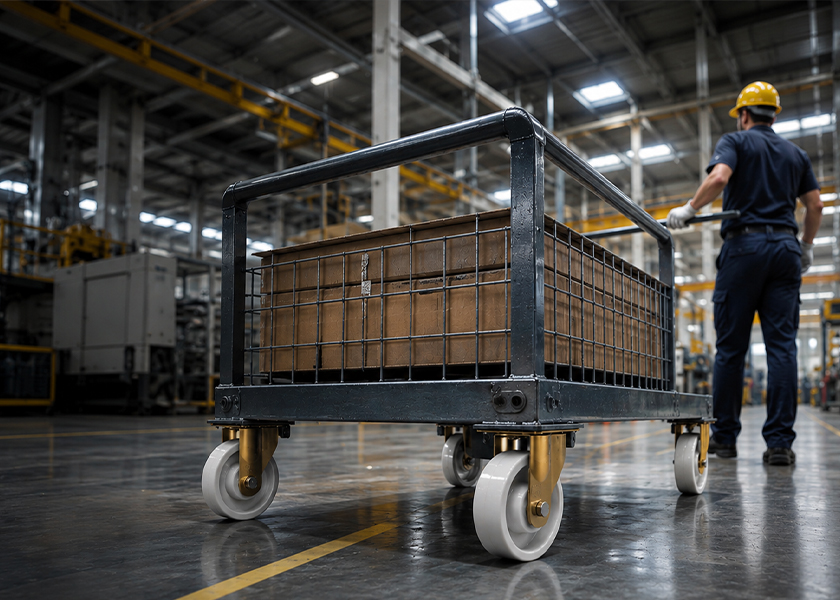
Material handling carts, logistics trolleys, transport platforms, and warehouse equipment operate continuously throughout the workday. In these applications, emphasis is placed on dynamic load capacity, rolling resistance, and maneuverability.
The objective is to reduce the physical effort required for movement while ensuring smooth transportation of materials and products throughout the facility.
Choosing the Right Industrial Wheel Material
Selecting wheel materials without considering environmental and operational conditions can lead to premature failure and increased maintenance costs. Engineers typically evaluate flooring conditions, operating temperatures, chemical exposure, and load requirements before selecting wheel materials.
Cast Polyurethane Wheels
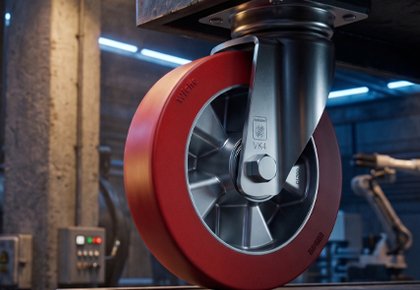
Cast polyurethane is often considered the preferred solution for industrial environments because it combines exceptional load-bearing capacity with floor protection. It offers:
- High load capacity comparable to metal wheels
- Excellent floor protection for epoxy and coated surfaces
- Quiet operation
- Resistance to wear and abrasion
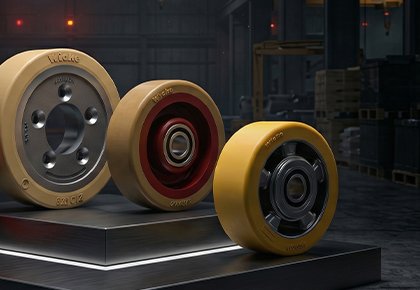
Polyamide (Nylon) Wheels
Polyamide wheels are widely used in pharmaceutical facilities, food processing plants, and cold-storage warehouses due to their:
- Resistance to moisture and chemicals
- Easy cleaning and sanitization
- High structural strength
- Low maintenance requirements
Cast Iron and Steel Wheels
Steel and cast iron wheels are typically reserved for extreme environments such as foundries, metalworking facilities, and high-temperature production areas.
These wheels provide:
- Exceptional load capacity
- Resistance to extreme temperatures
- Long service life in harsh industrial settings
However, they require durable concrete floors or steel tracks and may generate significant noise during operation.
Frequently Asked Questions for Engineers and Procurement Teams
How is the safe dynamic load capacity calculated?
The standard engineering formula is:
(Equipment Weight + Maximum Expected Load) ÷ (Total Number of Wheels – 1)
Subtracting one wheel provides a safety factor that accounts for uneven flooring conditions where weight distribution may temporarily shift onto fewer wheels.
What are leveling casters, and when should they be used?
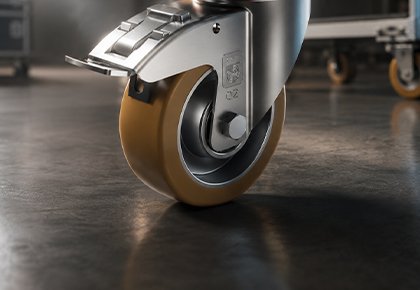
Leveling casters combine mobility with an adjustable leveling foot. They are ideal for equipment that occasionally requires movement but must remain completely stable during operation, such as CNC machines, precision measuring systems, and laboratory equipment.
Why are double ball bearings preferred in heavy-duty applications?
Double ball bearings distribute both vertical and lateral forces more effectively than standard bearings. They reduce rolling resistance, improve maneuverability, and significantly extend wheel service life under heavy loads.
Build a Safer and More Efficient Facility with One Step
Industrial performance depends not only on machinery quality but also on the engineering details that support safe and efficient operation. Selecting the correct wheel system based on scientific calculations helps reduce maintenance costs, improve workplace safety, and maximize equipment lifespan.
At One Step, we understand the technical requirements of modern industrial facilities. Our extensive range of heavy duty wheels for carts and industrial mobility solutions is engineered to perform under the most demanding operating conditions. Contact One Step today and let our technical specialists help you identify the ideal wheel configuration for your machinery, equipment, and material handling systems.