- By Admin
- 21 Sep, 2026
- Corporate
Drive tires for internal warehouse transport vehicles.
Modern warehouses and distribution centers rely on a wide range of internal transport systems to move materials and products between storage, processing, and shipping areas. With the growing use of material handling equipment and automated carts, drive wheels have become an essential component in the performance of these systems.
When searching for warehouse drive wheels in Saudi Arabia, the wheel should be considered as part of the complete drive system rather than simply a component installed underneath the equipment.
What Are Drive Wheels?
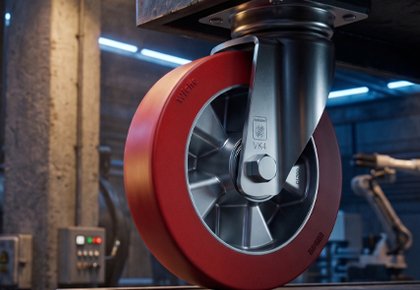
A drive wheel is a wheel that transfers power from the drive system to the floor to help move the equipment.
Drive wheels are used in various types of material handling equipment, including forklifts, internal transport systems, industrial vehicles, and automated equipment.
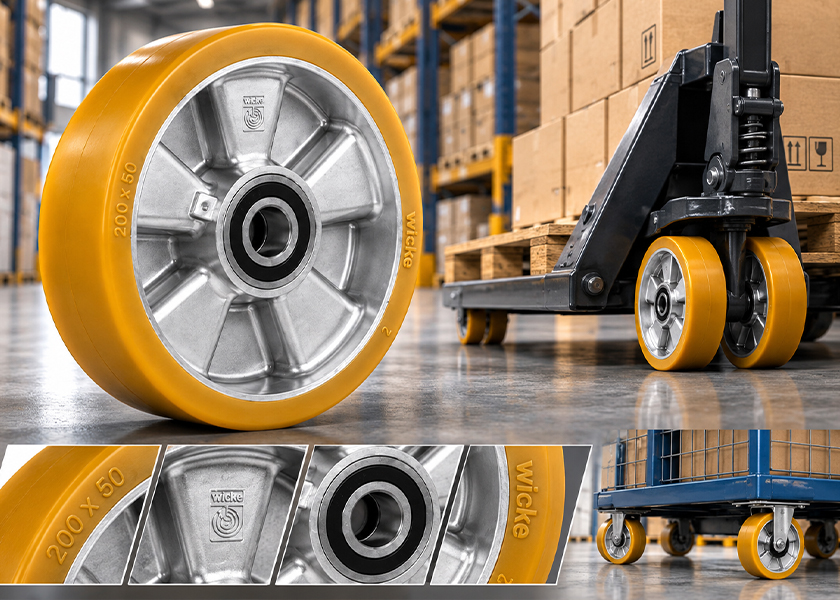
WICKE explains that drive wheels are used in equipment such as forklifts, AGVs, stackers, and pallet trucks, and are designed according to movement and load requirements.
Why Are Drive Wheels Important for Warehouses?
In internal transport equipment, the wheel is not only responsible for supporting weight. It must also handle the force generated by the drive system, maintain suitable traction with the floor, and withstand repeated operating cycles.
Therefore, choosing material handling wheels in Saudi Arabia requires considering several factors at the same time.
Key Factors When Choosing Warehouse Drive Wheels in Saudi Arabia
1. Load Capacity
The first step is to determine the weight that the equipment will carry during operation.
Some industrial drive wheels are designed for high load capacities, with different products available depending on the wheel design, material, and dimensions.
2. Traction
Traction is one of the most important factors in drive wheels because it determines the wheel's ability to transfer driving force to the floor.
The wheel tread material should be selected according to the floor type and operating conditions.
3. Floor Type
The warehouse floor has a direct impact on wheel performance.
Smooth concrete floors differ from floors with joints or uneven areas. Oils, dust, and other environmental factors that may affect traction should also be considered.
4. Equipment Speed
Some internal transport equipment operates at limited speeds, while other applications may require higher operating speeds.
Therefore, it is important to make sure that the selected wheel is designed for the required speed and operating conditions.
WICKE states that some of its drive wheels are designed for equipment that can reach speeds of up to 30 km/h, depending on the design and application.
Drive Wheel Materials
Wheel tread materials vary depending on the application.
Polyurethane
Polyurethane can be used in applications requiring good wear resistance, suitable load capacity, and specific movement characteristics.
Rubber
Rubber can be a suitable option when different traction and shock-absorption properties are required.
Elastic Rubber
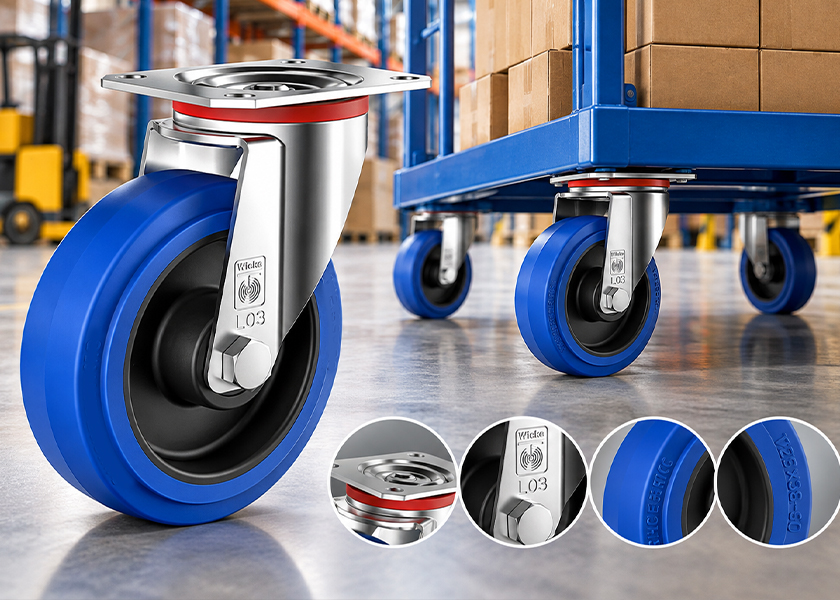
Elastic Rubber wheels are also available in designs intended for free movement or drive applications.
For example, WICKE offers black WICKE-ELASTIC drive wheels with different hardness levels and designs specifically developed for drive applications.
Warehouse Load Wheels or Drive Wheels?
It is important to understand the difference between the two terms.
A drive wheel transfers power from the drive system to the floor.
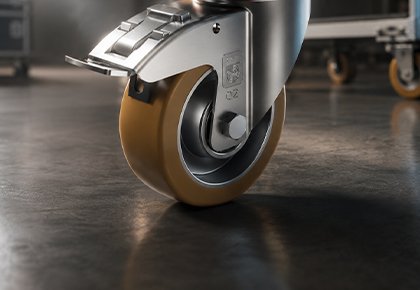
A load wheel, on the other hand, is primarily designed to support the load and facilitate equipment movement.
Therefore, the two types should not be randomly substituted for one another, even if their diameter or appearance is similar.
Each type should be selected according to the function it performs within the equipment.
Using Drive Wheels in Internal Transport Systems
Drive wheels are used in a variety of material handling applications, including:
- Internal transport carts.
- Forklifts.
- Storage and material handling equipment.
- Automated Guided Vehicles (AGVs).
- Automated transport systems.
- Equipment for moving goods inside distribution centers.
- Internal logistics systems.
WICKE indicates that its wheels are used in intralogistics, industrial vehicles, transport systems, and material handling applications.
How Do You Know When a Drive Wheel Needs to Be Replaced?
Several signs may indicate that a drive wheel needs to be inspected, including:
Wheel Tread Wear
If the wheel surface becomes significantly worn, it may affect performance and traction.
Reduced Movement Quality
Vibrations or noticeable changes in the way the equipment moves may require inspection of the wheel and its components.
Reduced Traction
If the wheel begins to lose traction with the floor during operation, the wheel tread, floor conditions, and drive system should be inspected.
Visible Damage
Cracks, separation, or abnormal damage require the equipment to be stopped and the wheel inspected by qualified personnel.
The Importance of Regular Maintenance
Maintenance does not simply mean replacing the wheel.
The following components and conditions should also be inspected:
- Wheel surface.
- Axle.
- Bearings.
- Mounting system.
- Wear and tear.
- Foreign objects.
- Floor condition.
- Drive system performance.
The equipment and wheel manufacturer's recommendations regarding load capacity, speed, and operating conditions should also be followed.
Choosing a Drive Wheel Supplier
When purchasing warehouse drive wheels in Saudi Arabia, it is preferable to work with a supplier that understands material handling and internal transport applications.
It is important to provide information such as:
- Equipment type.
- Manufacturer.
- Equipment model.
- Wheel diameter.
- Wheel width.
- Load capacity.
- Wheel material.
- Drive system.
- Floor type.
- Operating conditions.
These details help identify the wheel that best matches the application requirements rather than selecting a product based on dimensions alone.
One Step provides industrial wheel solutions for material handling and internal transport applications, with product options selected according to specific operating requirements.
Conclusion
Drive wheels are among the most important components of internal transport equipment because they combine load support, power transmission, and continuous contact with the floor.
Therefore, choosing warehouse drive wheels in Saudi Arabia should be based on load capacity, material, diameter, operating speed, floor type, and drive system.
Warehouse load wheels, on the other hand, perform a different function, and each wheel type should be selected according to its specific role within the equipment. Choosing the right wheel can help improve movement efficiency, reduce operating issues, and extend wheel service life.
Frequently Asked Questions
What is the difference between a drive wheel and a load wheel?
A drive wheel transfers power from the drive system to the floor, while a load wheel is primarily responsible for supporting the load and facilitating equipment movement.
Where are drive wheels used?
Drive wheels are used in forklifts, internal transport carts, AGVs, material handling equipment, and various logistics systems.
Can rubber be used for drive wheels?
Yes. Drive wheels are available with rubber and elastic rubber treads, depending on the equipment type and operating conditions.
How do I know when a drive wheel needs to be replaced?
Severe wear, visible damage, reduced traction, or unusual changes in equipment movement may indicate that the wheel requires inspection.
Is wheel diameter alone enough to choose a drive wheel?
No. Diameter, width, load capacity, material, equipment type, drive system, operating speed, and floor conditions should all be considered.