- By Admin
- Corporate
Specifications for wheels used on heavy-duty transport vehicles in logistics
Modern logistics and advanced supply chains—within ports and large-scale distribution centers—rely entirely on the rapid flow of cargo and the safe handling of containers and pallets weighing several tons. Any weakness in the mechanical transport systems carrying these goods leads to imminent operational stoppages and accelerated damage to expensive equipment. The wheels fitted to internal trailers and automated towing vehicles are subjected to intense shear forces, dynamic friction, and thermal stress, resulting from concentrated loads and continuous, round-the-clock movement.
Selecting the appropriate mobility components requires an advanced technical understanding of the physical and mechanical stresses involved. To ensure seamless logistics operations, you must verify that your transport components meet the highest standards designed for heavy-duty service.
What are the essential technical criteria for heavy-duty industrial wheels?
Heavy-duty transport wheels are ultra-durable mechanical rotation systems, engineered from robust alloys and advanced polymer treads. They are designed to support loads ranging from one ton to several tens of tons per unit, while offering exceptionally low rolling resistance and a high capacity to dissipate the heat generated by rapid mechanical movement within logistics warehouse environments. High-speed logistics storage and sorting facilities demand rigorous, uncompromising specifications. Their key engineering pillars include:
Superior dynamic load-bearing capacity, enabling the wheel to withstand intense mechanical shocks when traversing expansion joints or speed bumps.
Precision-sealed tapered roller bearings, packed with long-life synthetic grease to prevent the ingress of dust and moisture, while effectively absorbing axial and lateral forces generated during sudden turns.
Robust steel forks and brackets—manufactured via forging or laser cutting and free from weak weld joints—featuring reinforced pivot points for the swivel assembly.
Advanced tread compounds that prevent "flat spots" during prolonged periods of inactivity under maximum operational load, ensuring the wheel retains its roundness and minimizing the energy required to resume movement.
Material composition for heavy-duty transport cart wheels and the advantages of each material:
The choice of material for the outer tread and the metal core fundamentally determines a cart's ability to endure harsh handling conditions:
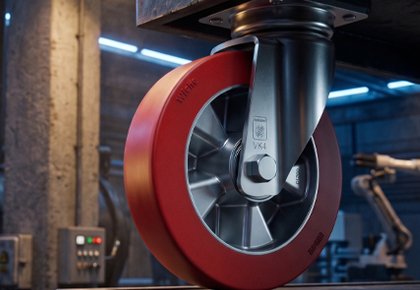
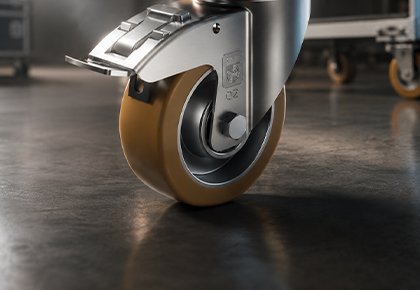
High-performance cast polyurethane (such as Vulkollan): Offers exceptional resistance to tearing and abrasion, generates minimal internal heat during towing, and provides complete protection for concrete flooring. It is the industry-standard choice for warehouse tugger trains and Automated Guided Vehicles (AGVs). Treated Cast Iron and Cast Steel: These materials offer the highest static load-bearing capacity for extremely heavy weights, without any compression or deformation. They are also highly resistant to oils, harsh solvents, and high temperatures—making them ideal for use in port terminals and heavy-duty maintenance facilities.
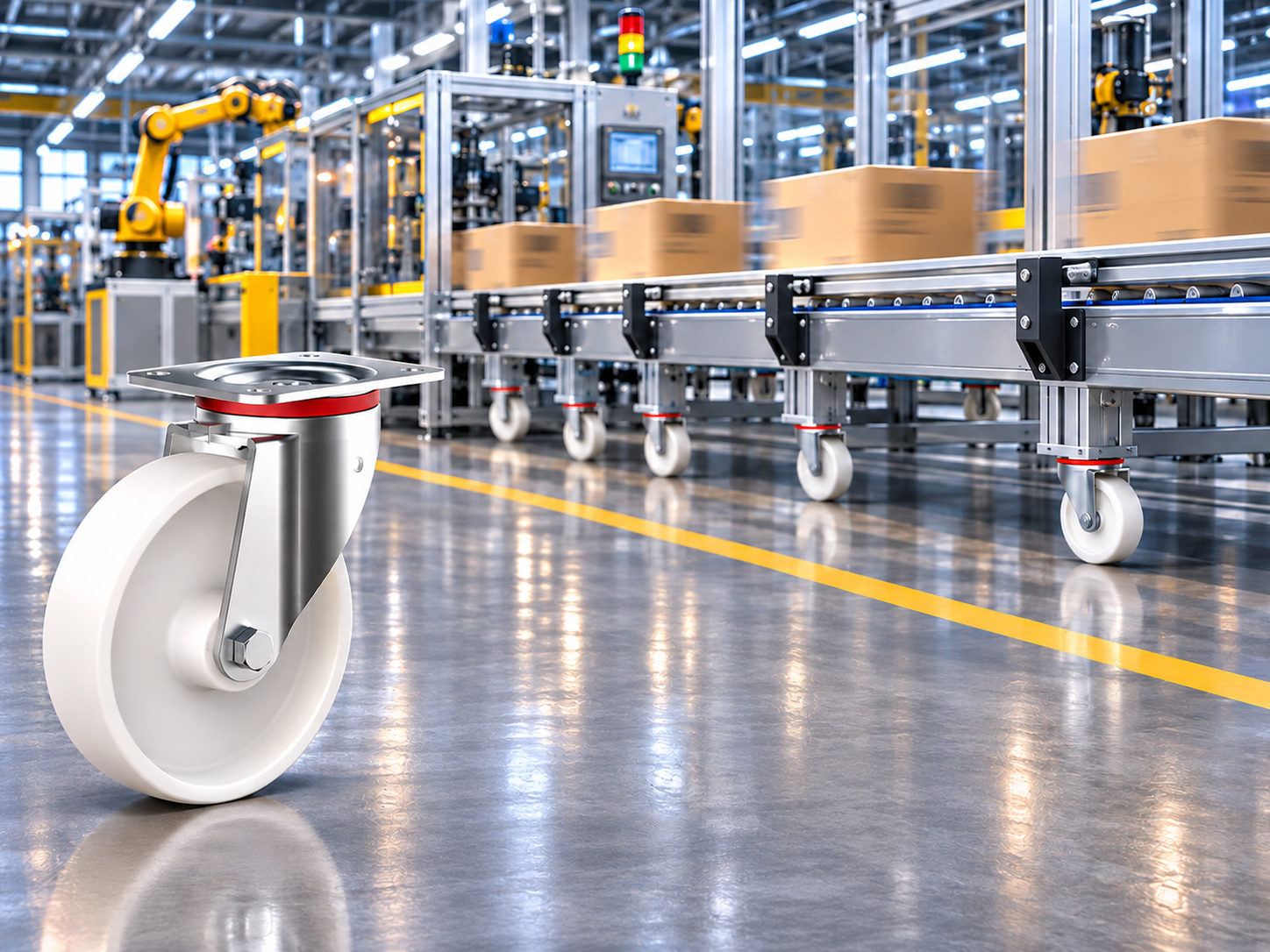
High-Density Nylon and Rigid Polyamide: These materials provide exceptionally low rolling resistance on smooth surfaces, while ensuring complete hygiene and resistance to acids. This makes them perfect for transporting chemical shipments and food-grade containers in dry ports.
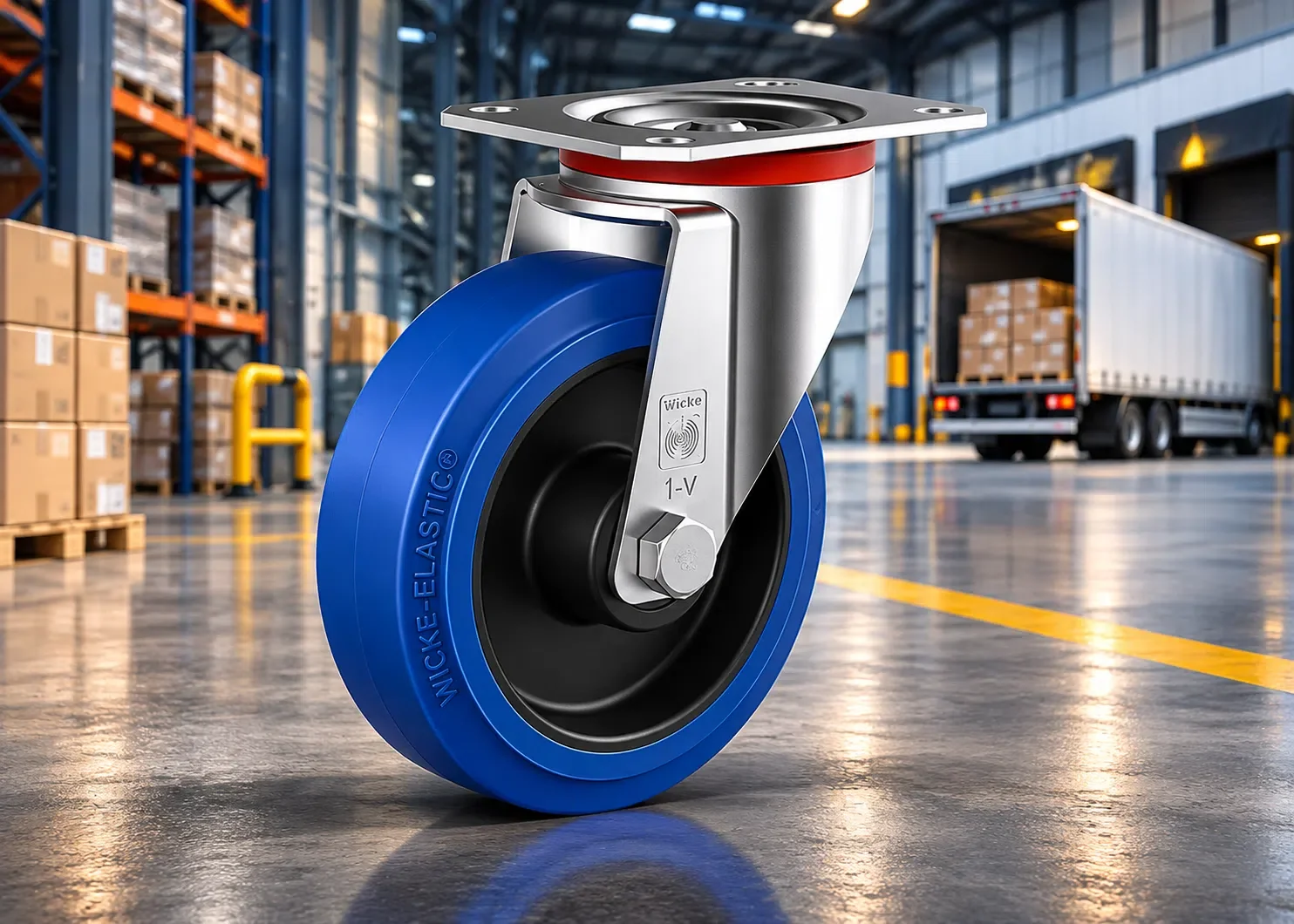
Steel-Reinforced Solid Elastic Rubber: This material ensures silent movement and superior vibration absorption. It is highly suitable for rough terrain and unpaved open areas outside of warehouses.
Specifications for Casters and Mounting Systems for Carts and Trailers
The caster fork represents one half of the mechanical equation and requires specific features to ensure the safe transport of sensitive loads:
1. Heat-Treated Swivel Raceway
Logistics operations require carts that can maneuver smoothly in tight spaces. This necessitates robust, hardened ball-bearing raceways equipped with external grease fittings (Zerk fittings), allowing for re-lubrication without the need to disassemble the caster.
Equipping the fork with four-way directional locks allows a swivel caster to be converted into a fixed (rigid) caster. This is essential when towing long "trains" of carts over straight distances, as it prevents the trailing carts from veering off the intended path. 2. Spring-Loaded Suspension Systems
Carts used to transport delicate medical equipment or technological components require heavy-duty casters equipped with springs or polymer cushions integrated into the housing. These components absorb surface irregularities and minimize vibrations transmitted to the cargo.
They reduce the "bouncing" of an empty cart during movement, which protects the bearings from premature mechanical damage.
They ensure that all wheels remain in constant contact with the floor, even when navigating uneven obstacles.
They extend the service life of the cart’s frame by dissipating impact energy through the mechanical springs.
How do you calculate the caster requirements for your factory’s internal transport fleet?
Sound logistical calculations—based on precise criteria—help prevent tipping accidents and structural failure under heavy loads:
Determine the total weight of the cart plus the maximum expected load, then divide this figure by a logistical safety factor (typically assuming a maximum of three load-bearing wheels for surfaces with varying conditions).
Factor in the actual towing speed; if carts are pulled by tractors at speeds exceeding 6–16 km/h, the nominal load capacity of the casters must be reduced by 20–40% to prevent overheating and tread separation.
Consider the tread width and wheel diameter. Selecting a diameter between 200 and 300 mm significantly reduces the torque and effort required to move the cart, while also allowing it to roll over industrial debris—such as nails or scraps—without coming to a halt. Assess the operating environment and verify the material's resistance to any hydraulic fluids or battery acids that may leak in warehouse areas, ensuring that the polymers do not corrode.
Frequently Asked Questions About Heavy-Duty Transport Wheels
What is the maximum permitted speed for towing heavy-duty transport wheels?
Most industrial wheels are designed for manual propulsion at a speed of 4 km/h. However, models intended for logistics towing—such as those used in warehouse "train" systems—are built to specific standards that allow for speeds ranging from 10 to 20 km/h, provided they are equipped with tapered roller bearings and highly resilient polyurethane treads.