- By Admin
- Corporate
Best Heavy-Duty Casters for Industrial Equipment
Moving massive machinery, large injection molds, and pressure vessels within industrial facilities leaves no room for miscalculation when selecting mechanical transport components. The failure of a single wheel under a machine weighing several tons can lead to an operational catastrophe—not only halting production but also destroying the equipment itself and posing a direct threat to the safety of operators. The forces exerted when moving heavy equipment extend beyond static weight; they intensify the moment movement begins or when navigating even a slight incline on the factory floor. This necessitates exceptional engineering reinforcement for every component within the transport assembly.
Properly equipping machinery and industrial gear requires designs capable of withstanding extreme dynamic stresses. To ensure maximum stability, it is essential to understand the technical distinctions that separate standard commercial-grade products from genuine heavy-duty solutions.
What are heavy-duty load-bearing wheels, and what is their function in industrial plants?
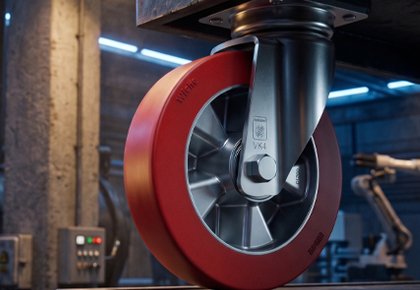
Heavy-duty load-bearing wheels are ultra-durable mechanical rotating units, specifically engineered to support and transport industrial equipment and machinery with high weight capacities—ranging from one ton to over 20 tons per wheel. They feature robust steel structures, reinforced axles, and precision bearings designed to minimize friction and facilitate the safe maneuvering of massive loads. Harsh industrial environments impose essential, specialized requirements. The value of these casters is evident in several critical areas:
Providing mobility for otherwise stationary equipment, facilitating routine maintenance and the reconfiguration of production lines without the constant need for heavy forklifts or costly overhead cranes.
Absorbing lateral forces generated by the rotation and vibration of heavy machinery during operation, thereby maintaining the precise alignment of sensitive equipment components.
Protecting concrete flooring from cracking or denting caused by the concentration of thousands of kilograms of weight onto a very small contact area.
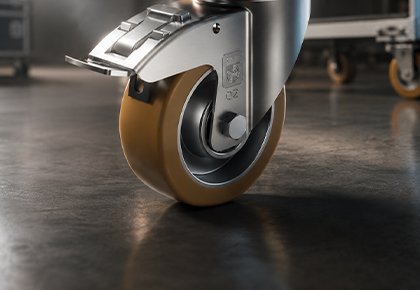
Ensuring equipment remains securely in its designated operating position through advanced locking mechanisms and floor brakes that prevent any unintended movement.
Core Engineering Components of Heavy-Duty Casters
Durability is no accident; it is the result of rigorous engineering integration among the mechanical components that make up these units:
1. The Fork and "Kingpinless" Swivel Assembly
In standard casters, the central "kingpin" often serves as the weakest point—the first part to break or bend under severe impact. Consequently, the highest-quality heavy-duty casters utilize a "kingpinless" design. This design features an internal circular raceway made of forged, heat-treated steel. Solid steel balls are precisely distributed within this raceway, allowing impact-induced stresses to be dispersed across the entire circular area rather than concentrated on a single pin. This grants the caster exceptional durability, ensuring it remains robust for years—even under heavy impact loads or aggressive maneuvering.
2. Swivel Assemblies and Tapered Roller Bearings
Handling extreme loads requires replacing standard bearings with advanced tapered roller bearing systems, which are engineered to withstand dual-directional pressures:
Supporting high vertical loads—the combined weight of the machinery itself and the raw materials it carries.
Resisting lateral (horizontal) forces generated by friction against the floor during turns in confined maneuvering spaces.
Providing a tight seal against industrial dust, metal shavings, and coolant spray, thereby protecting the swivel assembly from internal wear or sudden mechanical failure.
Premium Materials for Heavy-Duty Casters
The choice of material for the wheel core and the outer tread determines suitability for specific floor types and the total load to be transported:
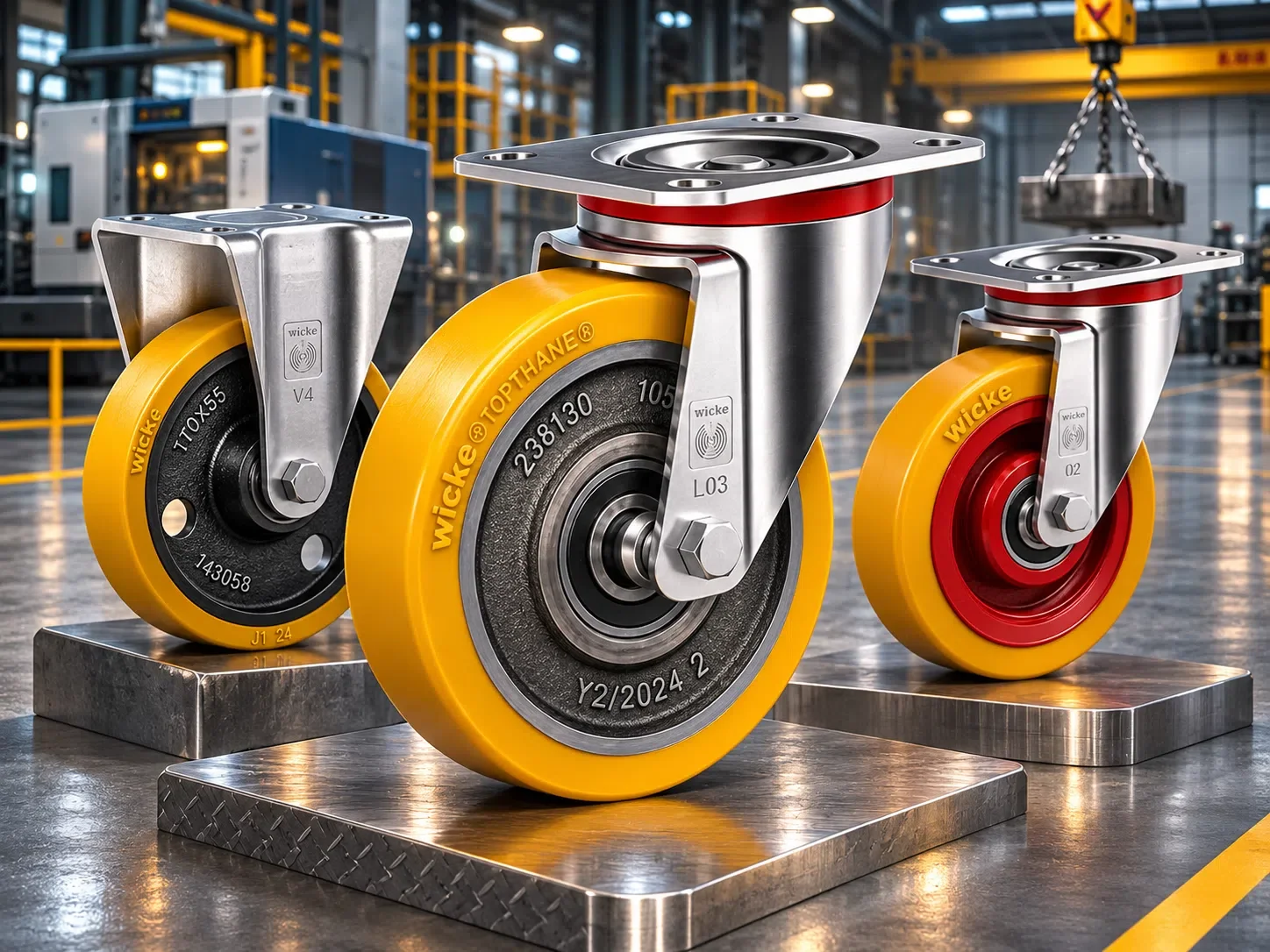
Ultra-high-density polyurethane on cast iron (or cast steel): A core of cast iron or cast steel encased in a thick layer of durable polyurethane. This is the most popular choice for large-scale industrial facilities, as it protects epoxy-coated floors and ensures quiet, smooth movement while supporting loads of several tons per wheel. Machined Steel and Treated Cast Iron: These offer the highest mechanical capacity, capable of withstanding extreme temperatures and immense loads—often exceeding tens of tons. They are typically used in metal foundries, furnace facilities, and on tracks designed for transporting heavy steel molds.
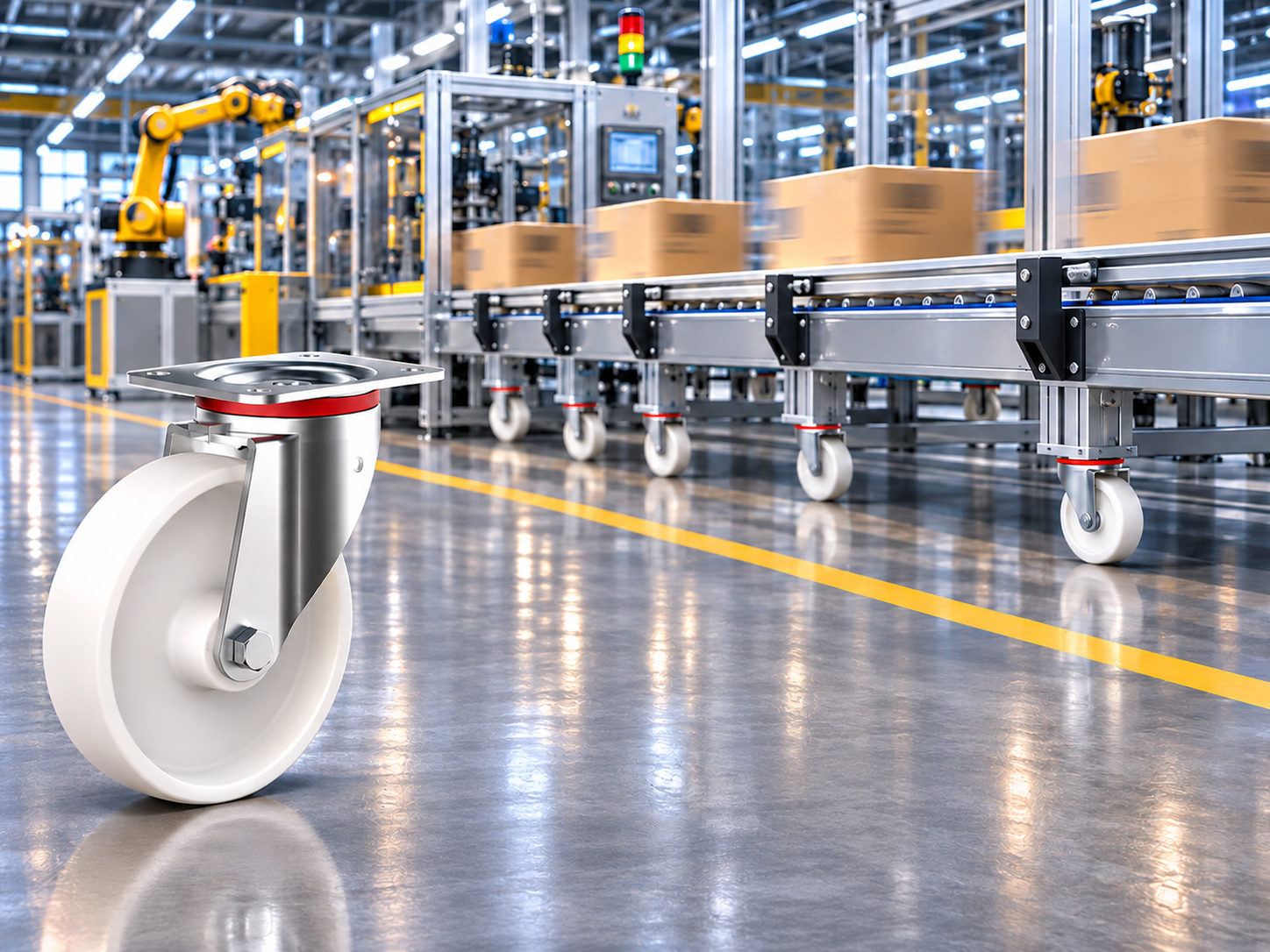
Cast Polyamide (High-Durability Nylon): Characterized by exceptional rigidity, this material ensures that rolling resistance is near zero. It also offers comprehensive resistance to acids, solvents, and harsh chemicals, making it an ideal choice for paper mills and petrochemical refineries.
Twin Wheel Casters: This design features two adjacent wheels mounted on the same axle within a single fork. This configuration doubles the load-bearing surface area and significantly improves maneuverability compared to a single, wide wheel.
How do you calculate the appropriate load capacity for your industrial machinery?
Precise engineering calculations protect your equipment from premature failure. The process relies on specific operational criteria:
Determine the total net weight of the machine, including the maximum weight of any products or molds loaded into it under peak operating conditions.
Divide the total weight by 3 rather than 4. This accounts for scenarios where one wheel may lose full contact with the floor—such as when passing over floor joints or minor surface irregularities—leaving the remaining three wheels to bear the entire load. Incorporate a "shock load factor"—ranging from 25% to 50%—if the equipment contains high-speed rotating parts, hydraulic pistons, or is subjected to rapid, forceful loading via cranes or hoists.
Select an appropriate wheel diameter; a larger diameter makes it easier to move the equipment and navigate over industrial debris without requiring excessive pulling force.
Frequently Asked Questions About Heavy-Duty Casters and Wheels
What is the difference between dual-wheel and single-wheel configurations for heavy loads?
A dual-wheel setup consists of two independent wheels that can rotate in opposite directions during turns (differential rotation). This significantly reduces surface friction against the floor and makes maneuvering much easier compared to a single, wide wheel, which would require greater mechanical torque to turn.