- By Admin
- Corporate
A Comparison Between Imported and Locally Sourced Calves: Which Should You Choose for Your Project?
Managing procurement and engineering equipment for industrial and commercial projects requires a careful balance between minimizing immediate capital expenditures and ensuring long-term operational efficiency. The selection of mobility components—such as casters for equipment and internal handling carts—goes beyond simple installation; it directly impacts productivity rates, worker safety, and the risk of sudden production line stoppages caused by unexpected mechanical failure.
Deciding between locally manufactured products and international alternatives requires a thorough assessment of daily usage requirements. A project involving light, intermittent movement has entirely different operational needs compared to a large-scale facility running three shifts a day and handling loads weighing several tons.
What is the fundamental difference between imported and locally produced casters?
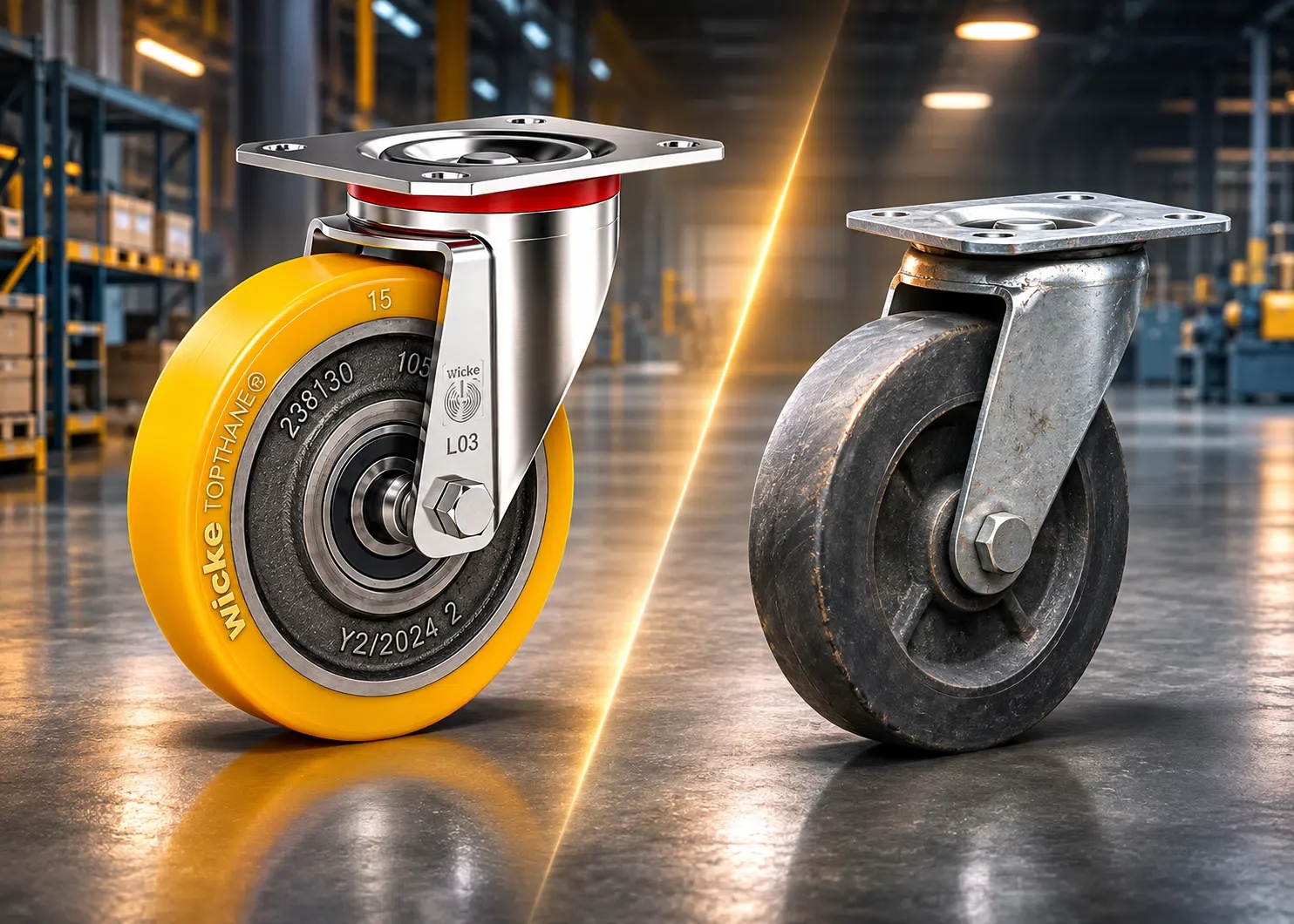
High-quality imported casters are engineered to meet rigorous international standards regarding material processing, wear resistance, and precision-manufactured bearings. This makes them ideal for heavy-duty loads and demanding operating environments. Conversely, locally produced casters offer an economical solution for light-to-medium-duty tasks, prioritizing lower initial purchase costs and the convenience of immediate local availability. An objective comparison between the two options requires breaking down each aspect of their manufacturing and performance to determine which is best suited for your facility’s environment:
Precision of Tread Chemical Compounds: Genuine imported wheels utilize polyurethane or flexible rubber compounds, cast using advanced thermal ovens that prevent the tread from separating from the metal core—a process requiring highly sophisticated production lines, far beyond the capabilities of most local workshops.
Resistance to Static and Dynamic Loads: Certified imported wheels undergo rigorous laboratory testing, confirming their ability to resist temporary flattening—even when left stationary for long periods under a full load.
Initial Cost vs. Total Cost of Ownership: While locally manufactured wheels offer a lower upfront price, imported products reduce long-term expenses by requiring less frequent maintenance and replacement over their years of service.
Availability and Lead Times: Locally produced wheels are readily available in the market for immediate purchase. In contrast, sourcing imported wheels requires working with professional suppliers who maintain substantial local inventory, thereby avoiding the long lead times associated with international shipping. Analytical Comparison: Strengths and Weaknesses of Each Option
Successful investment stems from selecting the right tool for the specific operational context—ensuring specifications are neither excessive nor insufficient:
1. Imported Wheels: Strength and Reliability for Heavy-Duty Tasks
The preferred choice for large-scale manufacturing plants, logistics companies, automated warehouses, and facilities where there is no margin for error:
Superior operational efficiency under extremely heavy loads, with no risk of structural deformation or failure of the steel mounts.
Advanced protection for industrial epoxy or treated concrete flooring; the outer tread is free from carbon impurities that typically leave dark marks.
Exceptional resistance to chemicals, oils, greases, and acids, making them ideal for petrochemical, pharmaceutical, and food-processing facilities.
Highly fluid rotation, which reduces the physical effort required for manual handling and conserves battery power in electric carts and smart warehouse transport systems.
2. Locally Sourced Wheels: Cost-Effectiveness and Flexibility for Standard Tasks
Provides practical, immediate solutions for small-scale workshops, craft-based businesses, and startups with limited budgets:
Low acquisition costs, well-suited for projects looking to minimize initial operational capital.
Rapid procurement and replacement—available the same day from the local market, eliminating the need to navigate import procedures.
Highly suitable for routine, intermittent, light-duty tasks that do not subject the wheels to constant mechanical stress. Flexibility in adjusting measurements and dimensions is possible through direct coordination with local workshops and machining facilities for non-standard specifications.
How do you choose the best option for your project?
To make the right choice and avoid wasting your procurement budget, consider the following operational criteria:
Shift patterns and operating hours: If your operation runs on continuous shifts with a high flow of materials, choosing certified imported casters is the only way to prevent unexpected downtime. Conversely, for intermittent use—limited to only a few hours per week—high-quality locally manufactured casters can perform the task with acceptable efficiency.
Load weight and risk factors: For loads exceeding 500 kg per cart, or for high-value, fragile items such as glass or electronic components, the durability of imported casters is essential to absorb vibrations and ensure maximum stability.
Method of movement: Mechanical towing—using tractors or cranes at speeds faster than a normal walking pace—requires imported engineering, featuring precision ball bearings and materials that do not generate excessive heat. Local casters, however, are suitable for simple, slow-moving manual carts.
Floor conditions and environmental hygiene: In pharmaceutical plants or cleanrooms, imported casters are required; they must comply with strict sanitary standards and be constructed from materials that do not degrade or harbor bacteria.
Frequently Asked Questions: Choosing Between Imported and Local Casters
Is the higher cost of imported casters economically justified?
Yes—decidedly so for factories and continuous production lines. Imported casters can last for years without the need for frequent lubrication or bearing replacement, which saves on maintenance labor costs, protects flooring, and prevents disruptions to supply lines.
How can one distinguish between an authentic imported caster and a poor-quality imitation?
An authentic product features trademarks and manufacturing codes clearly engraved on the metal housing and the tread. It also comes with official technical data sheets—detailing approved load capacities and speed ratings—and is available through recognized, authorized dealers and distributors.
When are locally manufactured casters the smarter choice for a facility?
Locally manufactured casters are the ideal solution for temporary projects, stationary storage carts that are rarely moved, or for use in workshops and small retail shops where the flooring...