- By Admin
- 21 Jun, 2026
- Corporate
Trolley Wheels for Warehouses: How to Choose the Right Wheel for Smooth Movement
The efficiency of modern supply chains and warehouse logistics depends heavily on the speed and flexibility with which goods move from receiving areas to storage racks. In these fast-paced and dynamic environments, material handling trolleys serve as the unsung heroes that enable workers to complete demanding tasks more efficiently and with less physical effort.
However, transforming a trolley from a simple metal structure into a highly efficient transportation tool depends entirely on one critical engineering component: the wheel. Selecting the wrong wheel can make routine transportation tasks unnecessarily difficult, increase worker fatigue, create safety hazards, and even damage expensive warehouse flooring.
If you are looking to improve productivity within your warehouse, investing in high-quality trolley wheels heavy duty solutions is the key to ensuring safe, efficient, and uninterrupted logistics operations.
The Importance of Choosing Industrial Trolley Wheels with Precise Engineering Specifications
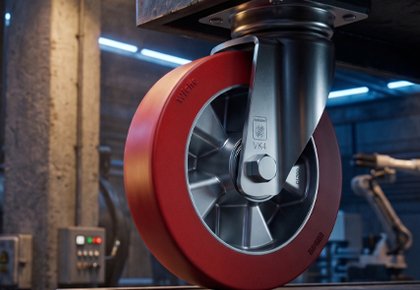
Industrial trolley wheels are designed to withstand continuous use while absorbing shocks caused by expansion joints, uneven surfaces, and metal thresholds commonly found in warehouses and distribution centers. Their role extends far beyond simple movement; they directly influence maneuverability, starting force, load stability, and overall operational efficiency.
Properly engineered industrial trolley wheels provide several immediate operational advantages:
Reduced Physical Effort (Ergonomics)
High-quality ball bearings significantly reduce rolling resistance, minimizing the force required to push or pull loaded trolleys and reducing worker fatigue.
Easy Maneuverability in Narrow Aisles
Smooth 360-degree swivel functionality allows operators to navigate tight warehouse aisles and storage racks with greater control and efficiency.
Extended Service Life
Industrial-grade wheels offer excellent resistance to wear, abrasion, and continuous contact with concrete surfaces, reducing replacement frequency and maintenance costs.
How to Choose Warehouse Wheels That Match Your Facility Requirements
Purchasing wheels without carefully evaluating load requirements and flooring conditions can result in damaged products
, worn flooring, and unnecessary maintenance expenses. An effective mobility system requires balancing cargo weight, operating conditions, transportation methods, and environmental factors.
When selecting warehouse trolley wheels, consider the following key factors:
1. Wheel Configuration and Distribution
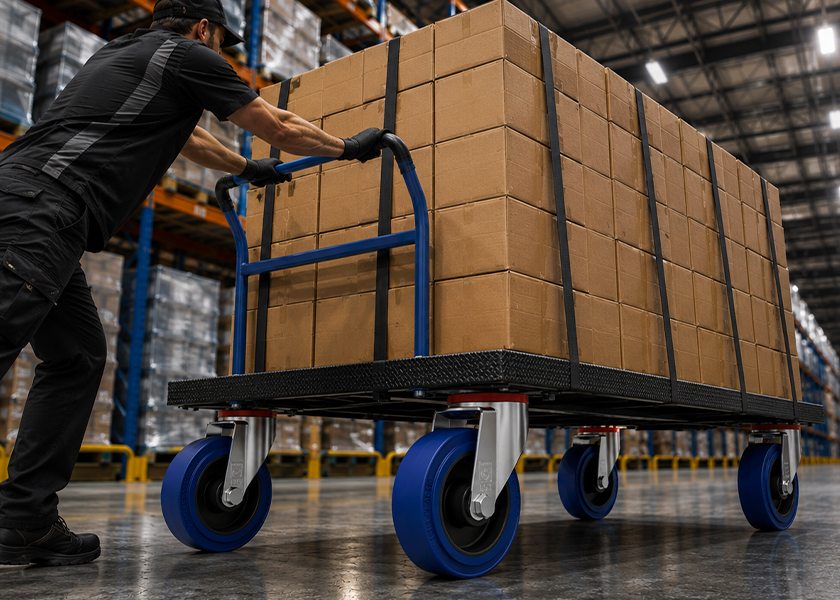
The most widely used and efficient configuration combines two rigid wheels at the rear for directional stability with two swivel casters at the front for enhanced maneuverability and steering control.
2. Total Load Capacity
Calculate the maximum load weight plus the weight of the trolley itself, then divide the total by the number of wheels while incorporating a safety margin to ensure reliable performance under real-world conditions.
3. Wheel Material Selection
Nylon and Polypropylene Wheels
These wheels are ideal for pharmaceutical, food processing, and clean-storage environments due to their resistance to moisture, chemicals, and frequent cleaning procedures.
Cast Polyurethane Wheels
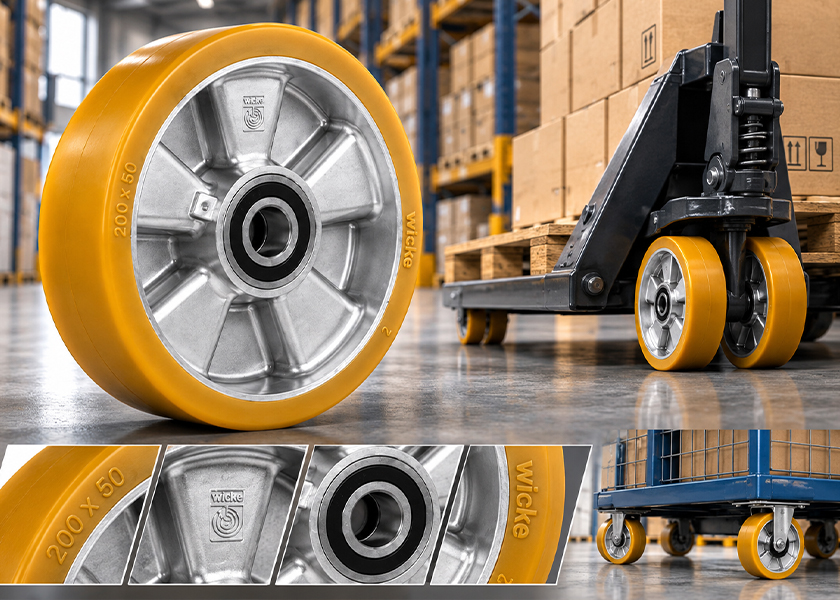
Often considered the premium choice for large warehouses, cast polyurethane combines excellent floor protection with high load capacity and quiet operation, making it suitable for demanding logistics applications.
Frequently Asked Questions About Warehouse and Trolley Wheels
What is the best wheel material for epoxy warehouse floors?
Polyurethane wheels are generally the best option for epoxy-coated floors because they provide smooth movement without leaving marks, scratches, or damage while maintaining excellent load-bearing performance.
Are wheels for manually pushed trolleys different from those used for mechanical towing?
Yes. Wheels used for mechanical towing by forklifts or tow tractors require reinforced bearings and materials capable of handling higher speeds and greater friction forces. Manual trolley wheels are typically optimized to reduce operator effort and improve ergonomics.
When should brake casters be installed on warehouse trolleys?
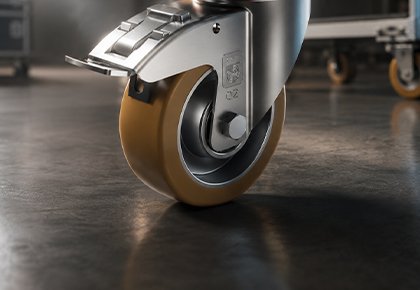
Brake-equipped casters should be used whenever trolleys operate on inclined surfaces or when loads must remain stationary during loading and unloading operations to improve worker safety and prevent accidental movement.
Conclusion: Move Your Logistics Operations Efficiently with Step One
Material handling trolleys are the lifelines of warehouse operations, and investing in the right wheels directly impacts productivity, workplace safety, and long-term operating costs. The quality of the wheel and its compatibility with your facility’s flooring and load requirements can make a significant difference in overall efficiency and maintenance expenses.
At Step One, we understand the challenges of warehouse management and logistics operations. That is why we offer a comprehensive range of warehouse wheels, industrial trolley wheels, and advanced mobility solutions designed to meet the highest international quality standards. Contact our technical and sales team today, and let us help you select the ideal wheel specifications to ensure smooth, fast, and safe movement throughout your facility.
Read more about Industrial Forklift Wheels