- By Admin
- 21 Sep, 2026
- Corporate
Load wheels and tires for material handling equipment and pallet trucks.
Material handling equipment and pallet trucks are among the most important solutions for transporting goods inside warehouses, factories, and distribution centers. The efficiency of this equipment depends heavily on the quality of the wheels used, especially Load Wheels, which carry a significant portion of the equipment and load weight during movement.
Load Wheels differ from Drive Wheels in terms of function. Load Wheels are primarily designed to support and transport loads, while Drive Wheels transfer driving force to the floor. Specialized manufacturers offer different Load Wheel solutions for material handling equipment and pallet trucks, with various materials, dimensions, and load capacities.
Therefore, when looking for Load Wheels in Saudi Arabia, the wheel should be selected based on the equipment type, load capacity, floor conditions, and daily operating requirements.
What Are Load Wheels?
Load Wheels are wheels designed to support heavy loads in material handling and internal transportation equipment.
They are used in a wide range of equipment, including:
- Pallet trucks.
- Hand Pallet Trucks.
- Manual material handling equipment.
- Stackers.
- Goods transport carts.
- Warehouse and storage equipment.
- Internal transportation systems.
Load Wheels are specifically designed for applications involving high loads and are used in industrial plants, production areas, conveyor technology, and internal transport systems.
Why Are Load Wheels Important?
Load Wheels are subjected to continuous pressure while transporting goods, so selecting the right wheel can help improve equipment movement, reduce wear, and minimize operating problems.
The right wheel can help provide:
- High load-bearing capacity.
- Lower rolling resistance.
- Easier equipment movement.
- Better stability for material handling equipment.
- Reduced wear.
- Longer service life.
- Better floor protection when the appropriate material is selected.
Choosing an unsuitable wheel, on the other hand, may result in premature wear, difficulty pushing the equipment, or increased operating noise.
Load Wheels in Saudi Arabia: Key Selection Factors
When searching for Load Wheels in Saudi Arabia, several specifications should be reviewed before purchasing.
1. Load Capacity
Load capacity is one of the most important factors when selecting a Load Wheel.
You should determine the weight of the equipment plus the maximum load it will carry, then calculate the required load capacity per wheel.
WICKE offers different load wheel and pallet truck wheel solutions with varying load capacities, depending on the product and application.
2. Wheel Diameter
Wheel diameter affects ease of movement and the ability to handle certain floor irregularities.
Larger wheels may provide smoother movement in some operating conditions, while smaller diameters may be suitable for compact equipment.
3. Floor Type
The wheel material should be selected according to the floor conditions in the warehouse or facility.
Concrete floors, industrial flooring, and floors that require protection from marks may require different wheel materials.
4. Operating Hours
Equipment that operates throughout the day requires wheels capable of handling continuous operation and frequent use.
Therefore, wear resistance and expected service life should be considered alongside load capacity.
Pallet Truck Wheels in Saudi Arabia
Pallet trucks require wheels specifically designed to move efficiently under heavy loads.
The wheel must be capable of supporting the weight of pallets and products while maintaining smooth movement through warehouse aisles.
When choosing Pallet Truck Wheels in Saudi Arabia, you should consider:
- Pallet truck type.
- Maximum load capacity.
- Wheel diameter.
- Wheel width.
- Bearing type.
- Axle size.
- Floor type.
- Daily operating hours.
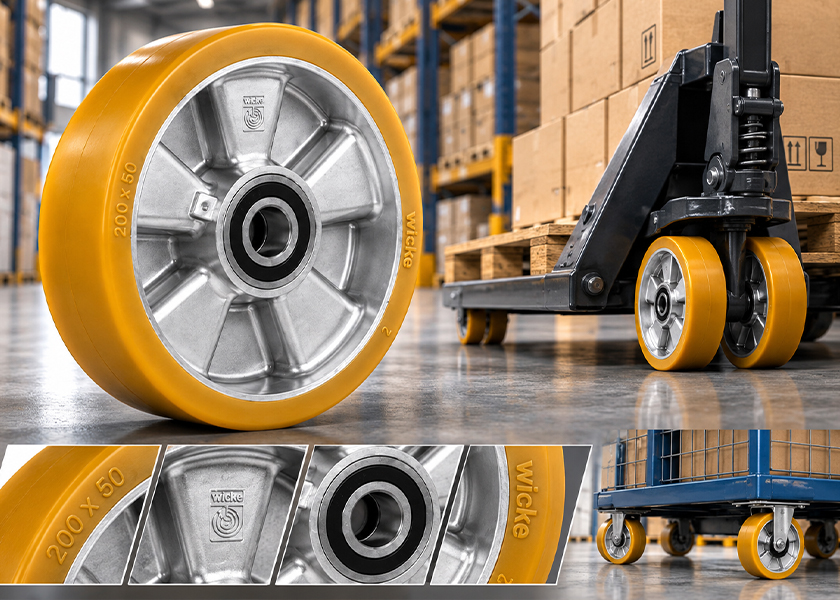
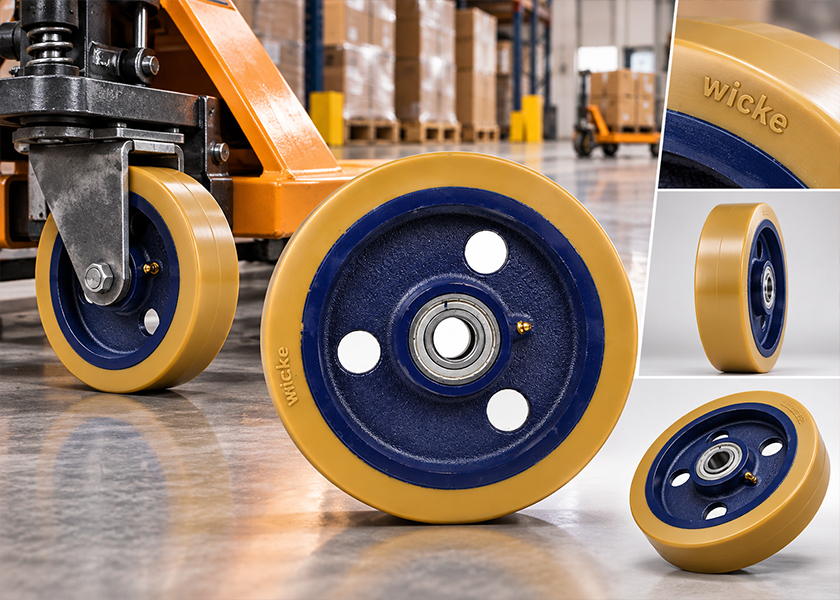
WICKE offers wheels specifically designed for hand pallet trucks used in warehousing, logistics, and industrial environments, with key considerations including load capacity, rolling resistance, and service life.
Pallet Truck Wheels in Saudi Arabia: Choosing the Right Material
Material handling wheels can be manufactured from several materials, and the right choice depends on the operating conditions.
Polyurethane
Polyurethane is a popular option when wear resistance and floor protection are important priorities.
Polyamide
Polyamide is known for its hardness, load-bearing capability, and good wear resistance across many applications.
Rubber
Rubber can provide flexibility, better shock absorption, and lower operating noise in certain applications.
WICKE offers wheels made from different materials, including polyamide, polyurethane, elastic rubber, and other specialized compounds for different applications and load requirements.
The Importance of Bearings in Load Wheels
Wheel performance does not depend only on the wheel tread material.
The bearing type also affects rolling resistance, ease of starting movement, and service life.
Common bearing types include:
- Plain Bearing.
- Roller Bearing.
- Ball Bearing.
WICKE explains that bearing selection plays an important role in how easily a wheel starts moving, how much load it can carry, and how long it can operate effectively.
How Do You Calculate the Required Load Capacity?
Start by determining the total operating weight:
Equipment Weight + Maximum Load = Operating Weight
The total weight can then be distributed across the number of wheels, while allowing an appropriate safety margin for actual operating conditions.
Theoretical calculations alone should not always be relied upon, because weight distribution can change during movement or when equipment travels over uneven surfaces.
Signs of a Damaged Load Wheel
Load Wheels should be inspected regularly.
Important warning signs include:
- Cracks.
- Visible wear.
- Changes in the wheel surface shape.
- Increased rolling resistance.
- Vibrations.
- Unusual noise.
- Significant reduction in wheel diameter.
- Difficulty pushing the pallet truck.
If any of these signs appear, the wheel and other components of the movement system should be inspected.
One Step Material Handling Solutions
One Step provides industrial wheel solutions for material handling, forklifts, logistics, warehouses, and other industrial applications. The company also identifies itself as an authorized importer of German WICKE industrial wheels and provides support for selecting suitable wheel solutions.
When choosing Load Wheels in Saudi Arabia, it is important to provide the equipment specifications, load capacity, floor type, and operating conditions before selecting a product, because the same wheel size may not be suitable for every application.
Frequently Asked Questions
What Are Load Wheels?
Load Wheels are wheels designed to support and transport heavy loads in material handling and internal transportation equipment, including pallet trucks and warehouse equipment.
What Is the Difference Between a Load Wheel and a Drive Wheel?
A Load Wheel primarily supports and carries the load, while a Drive Wheel transfers driving force from the drive system to the floor.
What Is the Best Material for Pallet Truck Wheels?
The best material depends on the floor type, load capacity, and operating hours. Polyurethane, polyamide, and rubber can all be suitable depending on the application.
How Do I Choose Pallet Truck Wheels in Saudi Arabia?
Consider the load capacity, wheel diameter, width, axle size, bearing type, floor conditions, and daily operating hours.
Can Any Wheel Be Used Instead of the Original Load Wheel?
Not necessarily. The replacement wheel must be compatible with the equipment in terms of diameter, width, axle, load capacity, bearing type, and other technical specifications.
Conclusion
Load Wheels in Saudi Arabia are essential components of material handling equipment and pallet trucks. Selecting the right wheels can improve movement, reduce wear, and support more reliable equipment operation.
When purchasing Pallet Truck Wheels in Saudi Arabia or Pallet Truck Load Wheels, focus on load capacity, floor conditions, wheel material, bearing type, dimensions, and operating requirements rather than price or appearance alone.