- By Admin
- 20 Sep, 2026
- Corporate
Stainless Steel Polyurethane Wheels for Medical Equipment (Rust-Resistant)
Medical equipment and hospital carts require wheels that combine smooth movement, durability under frequent use, corrosion resistance, and good hygiene standards. For this reason, medical polyurethane wheels in Saudi Arabia have become an important solution for many types of equipment and carts used in hospitals, clinics, laboratories, and healthcare facilities.
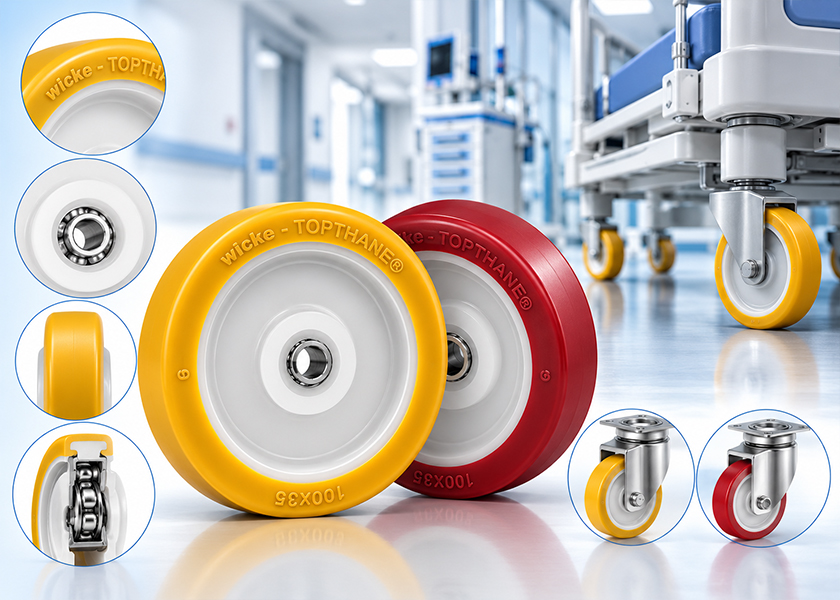
Polyurethane wheels with stainless steel frames or components are increasingly used when equipment is exposed to moisture, frequent cleaning, or operating conditions that require higher resistance to rust and corrosion. The combination of polyurethane and stainless steel provides a balance of quiet performance, easy movement, and better protection for surfaces and floors.
Why Do Medical Equipment Need Specialized Wheels?
Wheels used in medical equipment are not simply a means of moving a cart from one place to another. They directly affect ease of operation, stability, and noise levels during movement.
For example, a medical cart may be moved several times a day through corridors, rooms, and operational areas. Using unsuitable wheels can therefore increase rolling resistance, create noise, or lead to faster wear of both the wheel and the floor.
Wicke guidelines for medical wheels and equipment indicate that polyurethane can provide relatively quiet movement, help protect floors, and suit general equipment applications while also handling higher loads when properly specified.
Benefits of Polyurethane Medical Wheels
1. Quieter Movement
One of the main advantages of polyurethane is its ability to provide lower noise levels during movement compared with some types of hard wheels.
This is particularly important in hospitals and clinics, where carts and equipment are continuously moved near patient rooms and healthcare areas.
2. Good Wear Resistance
Medical wheels are exposed to frequent use, making wear resistance one of the most important factors when selecting them.
Polyurethane helps provide a suitable running surface for repeated use and can reduce the need for frequent wheel replacement when the correct specifications are selected for the application.
3. Better Floor Protection
Floors in hospitals and healthcare facilities need to remain in good condition, especially in corridors and areas with continuous traffic.
Polyurethane wheels are suitable for many types of flooring and can help reduce the impact caused by movement compared with some harder wheel materials.
4. Easy Movement
Choosing the correct wheel diameter and bearing type can make medical equipment easier to move, especially when carts are pushed over repeated distances.
For this reason, the wheel material should not be considered alone. Diameter, load capacity, mounting type, and the overall wheel design should also be evaluated.
Why Is Stainless Steel Important in Medical Equipment?
When discussing stainless steel medical wheels in Saudi Arabia, the term generally refers to the use of stainless steel frames or components in applications that require higher resistance to rust and corrosion.
Stainless steel is particularly suitable for environments exposed to moisture or frequent cleaning. Wicke explains that stainless steel caster wheels are suitable for hygienic and wet areas and provide good resistance to rust and corrosion.
Some INOX wheel solutions also use polyurethane wheel surfaces with stainless steel components, combining corrosion resistance with smooth and easy movement.
Where Are Polyurethane and Stainless Steel Wheels Used?
This type of wheel can be used in a wide range of medical equipment, including:
- Hospital carts.
- Medical equipment transport carts.
- Laboratory carts.
- Certain types of medication carts.
- Mobile medical equipment.
- Service carts used inside healthcare facilities.
- Equipment used in areas requiring corrosion resistance.
- Certain applications in operating rooms and laboratories, according to equipment specifications.
The wheel should always be selected according to the specifications of the equipment itself rather than based on the material alone.
How to Choose Medical Polyurethane Wheels in Saudi Arabia?
Before purchasing medical wheels, several key factors should be reviewed.
Load Capacity
The total weight of the equipment or cart, including the load it carries, should be determined before selecting wheels with an appropriate load capacity.
It is important to note that the stated load capacity of a wheel is usually specified per wheel according to the product specifications, and does not necessarily represent the capacity of the complete set of wheels.
Wheel Diameter
Larger wheels can make it easier to pass over certain gaps and obstacles, while smaller diameters may be suitable for equipment that requires a more compact design.
Mounting Type
Wheels can be available with Top Plate, Bolt Hole, or other mounting options depending on the equipment design.
Fixed or Swivel Wheels?
A swivel wheel makes it easier to change the direction of the equipment, while a fixed wheel is used when the desired direction of movement needs to remain more stable.
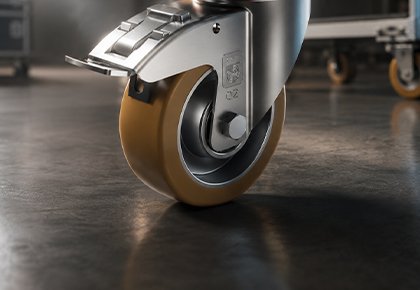
For some applications, a Swivel Caster with Brake can provide easy movement while allowing the cart to be secured when necessary.
What Is the Difference Between Polyurethane and Rubber?
Polyurethane is a good option when the priority is a combination of smooth movement, wear resistance, and reduced noise.
Rubber, on the other hand, generally provides good vibration absorption and quiet movement, making it suitable for certain equipment where greater comfort during movement is required.
The final choice depends on the floor type, load capacity, frequency of use, and operating environment.
Why Is Choosing the Right Supplier Important?
Getting suitable medical wheels does not depend only on selecting the wheel material. It is also important to ensure that the required sizes, load capacities, and mounting options are available.
One Step provides industrial wheel solutions across multiple categories, including products designed for healthcare applications and various industries.
Frequently Asked Questions
Are Polyurethane Wheels Suitable for Hospitals?
Yes. Polyurethane wheels can be used for many types of medical equipment and hospital carts, particularly when quiet movement and good floor protection are required.
Is Stainless Steel Rust-Resistant?
Stainless steel provides high resistance to rust and corrosion compared with many traditional steel types. This makes it particularly valuable in humid environments or areas that require frequent cleaning.
Can These Wheels Be Used in Laboratories?
Yes. Suitable wheels can be used for mobile laboratory equipment, provided that the load capacity, size, material, and other specifications match the intended application.
How Do I Determine the Required Load Capacity?
Determine the total weight of the equipment and its load, then select wheels with an appropriate load capacity while considering operating conditions and how the weight is distributed across the wheels.
Conclusion
Medical polyurethane wheels in Saudi Arabia with stainless steel components are a suitable option for many medical equipment applications that require quiet movement, good wear resistance, and ease of use.
Choosing the right wheel should not depend on the material name alone. It should also take into account wheel diameter, load capacity, mounting type, movement type, and the type of flooring used within the healthcare facility.