- By Admin
- Corporate
Why are German-made industrial casters considered the best choice for large factories?
In large-scale manufacturing environments—characterized by continuous shift-based operations and fast-paced supply chains—every single second carries significant financial and operational weight. In such settings, the risk of an unplanned breakdown is simply unacceptable. Heavy-duty assembly lines, automated warehouses, and the transport of massive metal molds require more than just basic handling equipment; they demand a mechanical mobility system capable of withstanding intense friction and extreme, round-the-clock loads without deformation or sudden failure.
This is precisely where German engineering stands out as a globally recognized gold standard. An initial investment in high-quality mobility solutions shields a facility from the burden of frequent replacement costs and costly production downtime.
What sets German-engineered industrial wheels apart from conventional alternatives?
Representing the pinnacle of engineering precision, German industrial wheels—and the mechanical mobility assemblies they comprise—are manufactured in strict accordance with German DIN quality standards. They are designed for maximum mechanical durability, minimal rolling resistance, and an extended service life, even under the most grueling load conditions and constant stress.
German superiority in this sector is not a matter of marketing or aesthetics; rather, it is rooted in precise manufacturing elements that clearly distinguish these products from lower-quality commercial alternatives:
This includes the exceptional purity of the chemical and metallic raw materials—most notably in heat-treated polyurethane compounds and specialized cast-iron alloys—which are engineered to resist cracking even under high-impact pressure. Precision manufacturing of bearings and ball-bearing assemblies ensures smooth, balanced rotation, reducing kinetic energy loss and internal friction to near zero.
Strict adherence to European industrial safety standards; every wheel is tested under conditions exceeding its maximum rated capacity to guarantee that the outer tread will not detach from the metal core.
Long-term economic sustainability: the initial price premium is offset by lower periodic maintenance costs and the prevention of costly production downtime.
Operational advantages of using German-made industrial wheels in production lines:
Major manufacturing plants and central warehouses do not select components arbitrarily; instead, they evaluate feasibility based on precise performance indicators that directly impact daily operating budgets:
1. Reduced rolling resistance and improved energy efficiency
Lower rolling resistance beneath a cart reduces the physical effort required for manual pushing, while also lowering battery or electricity consumption for automated guided vehicles (AGVs) in smart warehouses.
The specialized chemical composition of German-engineered treads prevents the wheel from developing "flat spots" when a cart remains stationary under a load of several tons. This ensures that resuming movement requires significantly less energy—unlike conventional wheels, which may "stick" to the floor, necessitating much greater force to get them moving again. 2. Maximum Protection for Industrial Epoxy Flooring
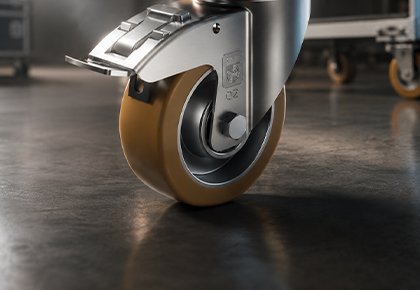
In pharmaceutical and food-processing plants, treated concrete and epoxy floors represent significant capital investments. Deep scratches or chemical erosion can lead to substantial losses and compromise hygiene standards.
The tread composition prevents the formation of carbon marks or black streaks, which typically occur during sudden stops or sharp turns.
The material’s dynamic elasticity absorbs minor impacts, shielding the floor’s surface layer from fragmentation or mechanical pitting caused by repetitive use.
Complete resistance to oils and solvents prevents debris from adhering to the tread and being tracked into sensitive production areas.
Key Materials and Applications for German-Made Industrial Casters
A diverse range of engineering solutions addresses the specific challenges found in petrochemical plants, automotive facilities, and heavy-duty food processing:
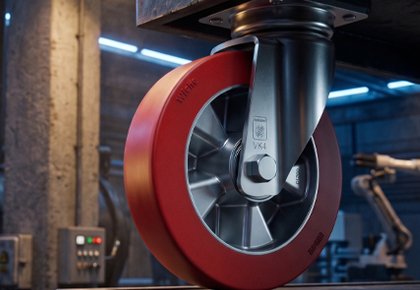
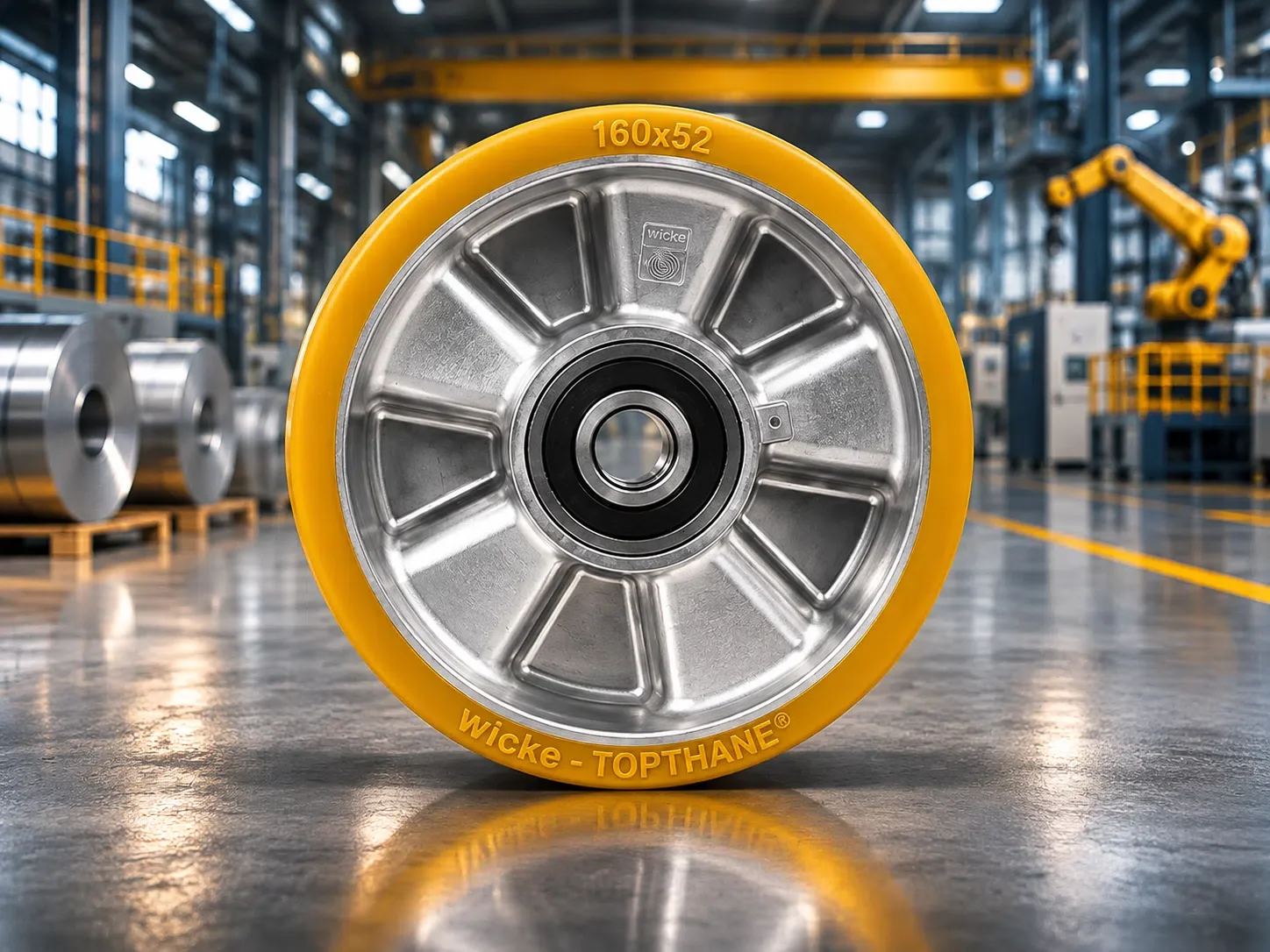
High-performance German polyurethane (e.g., from brands like Blickle or Wicke): Offers exceptional tear resistance and load-bearing capacities—capable of supporting several tons per caster—making it the ideal choice for automotive plants, automated assembly lines, and high-bay warehousing.
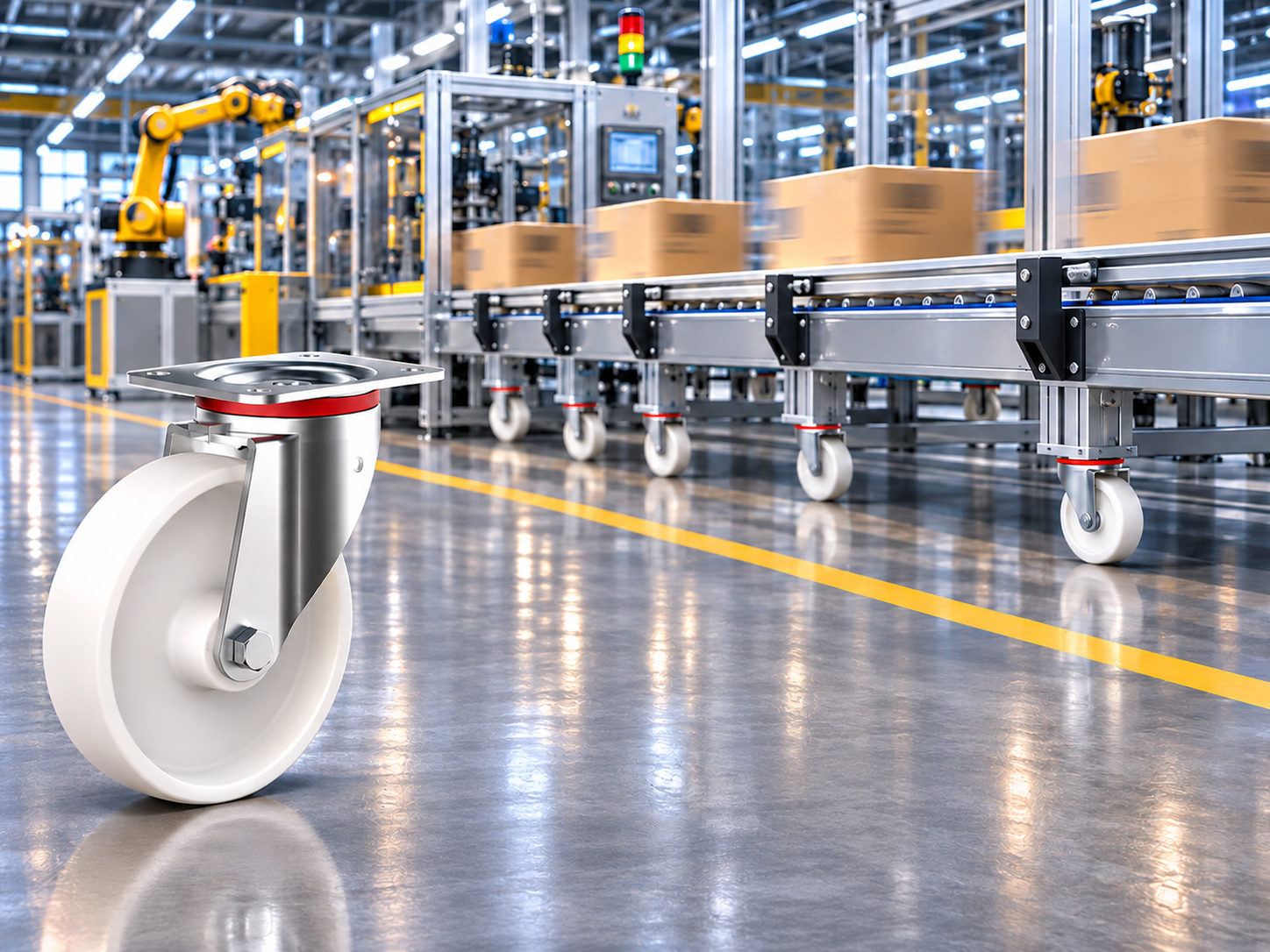
Premium-grade polyamide and pure nylon: Highly rigid and resistant to acids, solvents, steam cleaning, and high temperatures, making these materials perfect for food and pharmaceutical plants, as well as chemical laboratories. Solid, durable steel and mechanical-grade cast iron: Precision-cast and free of air pockets, these are designed for environments such as foundries, steel furnaces, and cement plants—settings that demand resistance to extreme temperatures and the ability to support massive loads.
Advanced elastic rubber: Engineered for ultra-quiet movement and superior vibration absorption, this material is ideal for transporting sensitive equipment, glass, and medical devices.
Total Cost of Ownership (TCO): Low-cost casters vs. German-engineered alternatives
A savvy financial manager always considers the Total Cost of Ownership (TCO) rather than just the initial purchase price. The distinction becomes clear over the equipment's lifecycle:
Operational lifespan: Genuine German-made industrial casters last 4 to 6 times longer than low-cost, generic alternatives, completely eliminating the need for frequent, disruptive monthly replacements.
Cost of unplanned downtime: The failure of a single caster under a critical load can bring an entire production line to a standstill for hours—a cost that far outweighs the price of a full set of high-quality German casters.
Personnel safety: Robust brackets and precision-engineered dual-braking systems prevent loads from sliding on inclines, ensuring an accident-free work environment and reducing costs related to workplace injuries, compensation, and medical insurance. Criteria for Selecting the Appropriate German-Engineered Model for Your Facility
To determine the correct category from technical catalogs, one must follow a clear, step-by-step process to ensure maximum benefit from German engineering specifications:
Calculate the total net weight and divide it by the actual safety factor applicable to the factory environment, while accounting for unbalanced loading.
Assess the ambient temperature—whether in sub-zero freezing chambers or near industrial furnaces—to determine the appropriate type of bearing grease and tread material.
Evaluate the method of transport: whether it involves manual pushing by personnel or mechanical towing (e.g., via warehouse tow trains) at speeds ranging from 6 to 12 km/h. Mechanical towing requires specialized German-engineered wheels equipped with appropriate bearings.