- By Admin
- 21 Sep, 2026
- Corporate
Guide to Choosing Wheels and Casters for Food and Beverage Factories in Saudi Arabia
Food and beverage factories require mobility equipment and components that can withstand daily operating conditions while maintaining high standards of hygiene and safety. Industrial wheels and casters are important components in transport carts, material handling equipment, mobile worktables, production lines, and storage carts used inside factories.
Choosing the right wheel depends on more than load capacity. Operating environment, moisture levels, cleaning and sanitation procedures, floor type, temperature, and cleaning chemicals must also be considered.
Therefore, when searching for food factory wheels in Saudi Arabia, it is important to select solutions designed to meet the requirements of the food and beverage industry while providing smooth movement, durability, and corrosion resistance.
Why Do Food Factories Need Specialized Industrial Wheels?
The environment inside food and beverage factories differs from many other industrial environments. Equipment may be repeatedly exposed to water, moisture, and cleaning agents, while some production lines require frequent washing and sanitation.
For this reason, wheels used in these environments should be capable of handling operating and cleaning conditions without excessive corrosion or loss of performance.
Ease of cleaning is also an important consideration when selecting mobility components. Wheel and caster designs that minimize areas where dirt and moisture can accumulate can help support a more suitable operating environment for food production facilities.
Key Factors When Choosing Food Factory Wheels in Saudi Arabia
Several factors should be evaluated before purchasing industrial wheels for a food or beverage factory.
1. Corrosion and Rust Resistance
Wheels used in food factories can be frequently exposed to water, cleaning agents, and moisture, making corrosion resistance an important characteristic.
Stainless steel components can provide good corrosion resistance, making them suitable for environments requiring frequent cleaning and high moisture resistance. However, the appropriate stainless steel grade should be selected according to the operating environment and cleaning chemicals involved.
2. Ease of Cleaning
The wheel should be easy to clean and should not have complicated designs that allow dirt or material residues to accumulate.
This highlights the importance of hygienic wheel and caster designs, particularly in food factories where washing and cleaning are performed frequently.
3. Load Capacity
Before selecting a wheel, determine the total weight of the equipment or cart and the load it will carry.
The number of wheels, weight distribution, and movement conditions should also be considered.
Selecting a wheel with an appropriate load capacity helps reduce stress on the components and can contribute to a longer service life.
4. Floor Type
The appropriate wheel can vary depending on the floor type inside the factory.
Epoxy, concrete, and industrial tile floors may require different wheel materials, especially when reducing noise, protecting the floor, or achieving smoother movement is a priority.
5. Temperature
If wheels are used near ovens, cooling areas, or refrigerated storage, the wheel material must be capable of handling the actual operating temperatures.
The material should therefore be selected according to the real temperature conditions rather than the general application alone.
What Are Food-Grade Industrial Wheels in Saudi Arabia?
The term food-grade industrial wheels in Saudi Arabia refers to wheels and casters intended for environments where high standards of hygiene, corrosion resistance, and ease of cleaning are important.
These wheels can be used in various food and beverage factory applications, including:
- Raw material transport carts.
- Product transport carts.
- Internal material handling equipment.
- Storage carts.
- Mobile industrial worktables.
- Production equipment and lines.
- Central kitchen carts.
- Packaging equipment.
- Certain storage and distribution applications.
Wheel specifications should always be determined according to the actual application, because a wheel suitable for a lightweight cart may not be suitable for heavy industrial equipment.
Stainless Steel Wheels in Saudi Arabia: Why Are They Important?
Stainless steel wheels in Saudi Arabia are used in many applications requiring good resistance to moisture and corrosion along with ease of cleaning.
Stainless steel is widely used in food-related industries because of its corrosion resistance and cleanable surfaces. However, the appropriate stainless steel grade should be selected according to the operating and cleaning conditions.
Important benefits of stainless steel solutions include:
Moisture Resistance
Corrosion resistance can make stainless steel components more suitable for humid environments and frequent washing.
Easy Maintenance
Easy-to-clean surfaces and suitable designs can help reduce the time required to clean mobility equipment.
Longer Service Life
When the correct material and specifications are selected for the operating environment, the wheel and caster can provide more consistent performance over time than components that are not suitable for the conditions.
Suitability for Hygienic Environments
Ease of cleaning and minimizing areas where dirt can accumulate are important considerations when designing mobility equipment for food-processing environments.
How Do You Choose the Right Wheel Material for a Food Factory?
There is no single wheel material that is suitable for every food factory. The material should be selected according to the application.
Rubber Wheels
Rubber wheels can be suitable for applications requiring quiet movement and better shock absorption, with the specific rubber compound selected according to the floor, load, and operating conditions.
Polyurethane Wheels
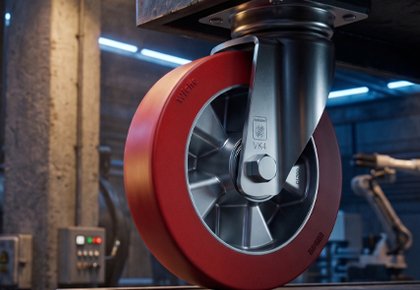
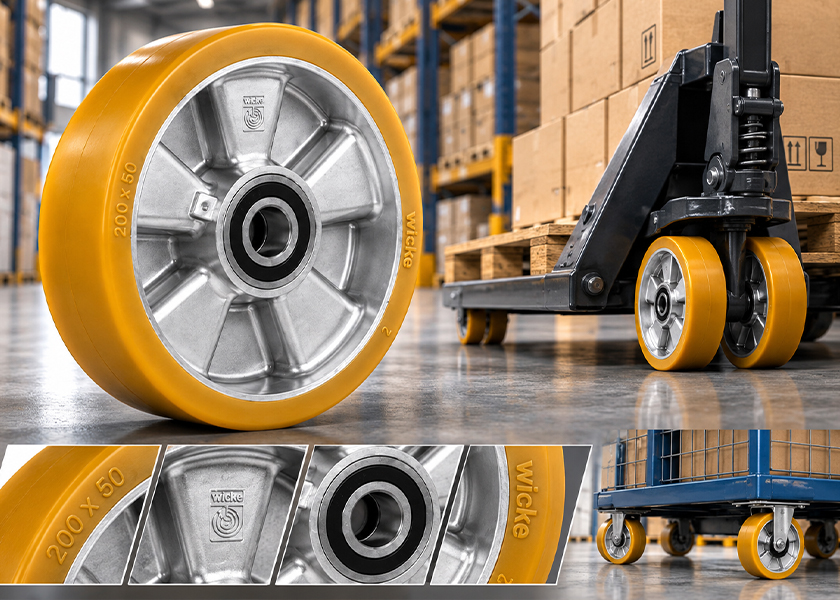
Polyurethane wheels are used when wear resistance, floor protection, and quiet movement are priorities. They can be suitable for many carts and material handling applications in industrial facilities.
Polyamide Wheels
Polyamide wheels offer good load-bearing capability and resistance to certain chemicals and can be used in various industrial applications after confirming compatibility with the factory environment.
Wheels with Stainless Steel Chassis
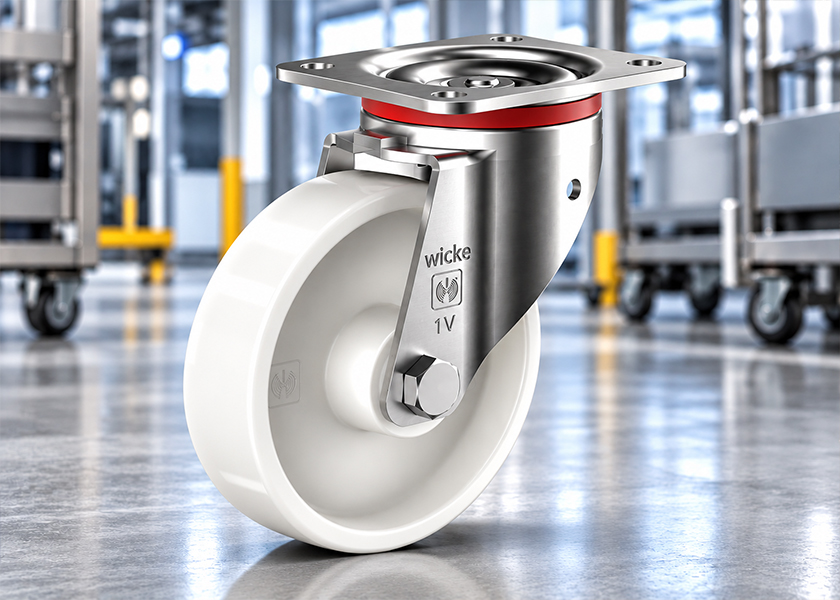
In environments exposed to water, moisture, and frequent cleaning, a stainless steel caster chassis can be a suitable option, particularly when corrosion resistance and hygiene are important priorities.
Fixed or Swivel? Choosing the Right Caster Type
A common mistake is to choose the wheel material without considering the required movement.
Fixed Casters
Fixed casters move in a straight direction and are suitable for carts that follow defined paths.
Swivel Casters
Swivel casters allow changes in direction and are useful for carts and equipment that need to maneuver in limited spaces.
Swivel Casters with Brakes
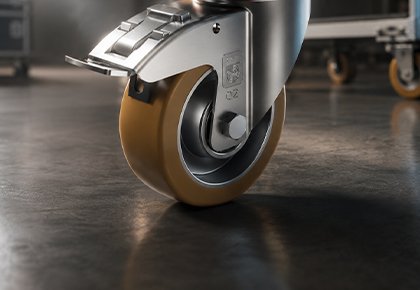
These combine maneuverability with the ability to secure the cart when required. They are useful for equipment that needs to move and then remain securely positioned during operation.
How Do You Determine the Required Load Capacity?
To calculate the required load capacity, determine the equipment or cart weight together with the maximum expected load.
For example, if the total operating weight is 1,000 kg and four wheels are used, it is not advisable to select four wheels with a combined rated capacity of exactly 1,000 kg without an appropriate safety margin.
Operating conditions, impacts, floor characteristics, and weight distribution should also be considered because the actual load on each wheel may not remain equal during operation.
Therefore, it is better to select a load capacity suitable for actual operating conditions rather than relying only on theoretical calculations.
Why Is Choosing the Right Supplier Important?
Choosing a supplier is not only about price. Product quality and compatibility with the intended application are equally important.
When purchasing food factory wheels in Saudi Arabia, it is important to verify:
- Wheel material specifications.
- Wheel diameter.
- Load capacity per wheel.
- Mounting type.
- Caster type.
- Brake availability when required.
- Floor compatibility.
- Corrosion resistance.
- Cleaning and washing conditions.
- Operating temperatures.
- Technical support and availability of suitable products.
Having access to a wide range of industrial wheels also helps factories select an appropriate solution instead of using one wheel type for every application.
Why Choose One Step for Industrial Wheels?
One Step provides industrial wheels and caster solutions for multiple sectors, including the food and beverage industry, with different materials and configurations designed for various applications.
Understanding the final application, load capacity, wheel diameter, floor type, and operating environment helps determine the appropriate specifications for each case.
For factories in Saudi Arabia searching for food-grade industrial wheels in Saudi Arabia, product selection should begin with actual operating requirements rather than price or appearance alone.
Important Tips Before Buying Food Factory Wheels
Before making a purchasing decision, use this checklist:
- Determine the total equipment weight and load.
- Determine the required number of wheels.
- Choose the appropriate wheel diameter.
- Identify the floor type.
- Review moisture and water exposure.
- Identify the cleaning chemicals used.
- Determine operating temperatures.
- Select the appropriate wheel material.
- Determine whether fixed or swivel casters are required.
- Choose brakes if the application requires secure positioning.
- Confirm that the caster construction is suitable for the food environment.
- Work with a supplier capable of providing the required technical specifications.
Frequently Asked Questions
What Are the Best Wheels for Food Factories?
The appropriate wheel depends on the factory environment, load, temperature, moisture, and cleaning procedures. In environments with high moisture and frequent cleaning, corrosion resistance and ease of cleaning are important selection factors.
Are Stainless Steel Wheels Suitable for Food Factories?
Yes, they can be suitable for many food and beverage applications, particularly environments requiring corrosion resistance and easy cleaning. The appropriate stainless steel grade and specifications should be selected according to the operating conditions.
What Is the Difference Between Food-Grade Industrial Wheels and Standard Industrial Wheels?
Wheels used in food environments require additional consideration of factors such as hygiene, ease of cleaning, moisture and corrosion resistance, and cleaning chemicals—not just load capacity.
How Do I Know the Required Wheel Load Capacity?
Start by calculating the total equipment and load weight, then consider the number of wheels, operating conditions, and weight distribution. It is generally better to allow an appropriate margin rather than selecting a capacity equal to the theoretical load only.
Are Swivel Casters Better Than Fixed Casters?
Not necessarily. Swivel casters are suitable when equipment needs to maneuver and change direction, while fixed casters are more suitable for straight-line movement and defined paths.
Why Is Choosing the Right Wheel Important for Food Factories in Saudi Arabia?
Selecting the appropriate wheel can improve equipment mobility, reduce wear and maintenance issues, protect floors, and provide a mobility solution that better matches hygiene and cleaning requirements inside the factory.
Conclusion
Choosing food factory wheels in Saudi Arabia requires evaluating multiple factors rather than focusing only on wheel diameter or load capacity. Food and beverage manufacturing environments require careful consideration of corrosion resistance, ease of cleaning, wheel material, floor type, operating temperatures, and washing and sanitation procedures.
Stainless steel wheels in Saudi Arabia can be an important option for environments exposed to moisture and frequent cleaning, while the wheel material itself should be selected according to the load, application, and floor conditions.
By selecting food-grade industrial wheels in Saudi Arabia according to the actual operating requirements, factories can improve the movement of material handling equipment and carts while supporting reliable and efficient daily operations.